India, officially the Republic of India, is a country in South Asia, characterized by its large size, diverse landscape, and location between the Indian Ocean and the Himalayas. The country is divided into six main regions: the Himalayas in the north, the Northern Plains, the Thar Desert in the northwest, the Deccan Plateau in the south, the Coastal Plains, and two island groups (the Andaman and Nicobar Islands and the Lakshadweep Islands). India has a tropical monsoon climate and shares borders with several countries, including Pakistan, China, and Bangladesh.
India's diverse geophyte flora includes over 186 species in the Western Ghats alone, with genera like Habenaria and Ceropegia being particularly well-represented.
Photographs and much of the text from Saket Shrotri.
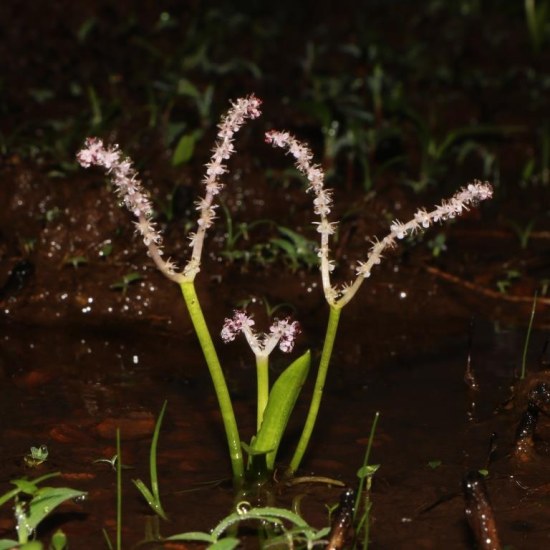
Aponogeton satarensis Sundararagh., A.R.Kulk. & S.R.Yadav is a species from India. This annual, tuberous aquatic herb from the Aponogetonaceae family features distinctive forked, purple inflorescences and dioecious reproduction. It grows in temporary ponds and puddles, often alongside other hydrophytes such as Eriocaulon and Rotala and is endemic to high elevation laterite plateaus of the northern Western Ghats in Maharashtra, India. IUCN Red List status: Endangered.
Arisaema murrayi (J.Graham) Hook. Known as Murray's Cobra Lily, this herbaceous monocot produces a striking spathe and a compact corm, with elliptic to lanceolate leaflets. It typically inhabits shaded forest slopes and rocky outcrops of the Western Ghats in India.

Chlorophytum breviscapum Dalzell is a short scaped spider plant native to South India; it occupies seasonally dry tropical habitats.

Crinum brachynema Herb. is a striking bulbous geophyte that typically reaches 30-60 cm in height and produces an umbel of white-flowered blooms along a robust scape. Endemic to parts of western India (notably Maharashtra) where it graces lateritic plateaus and rocky hill slopes, it is listed as Critically Endangered because of its narrow distribution and declining populations.

Cryptocoryne spiralis (Retz.) Fisch. ex Wydler is a perennial aquatic aroid native to regions in South India (Western Ghats). It features linear-lanceolate leaves and a spirally twisted spathe, adaptations typical of helophytes that inhabit slow-moving freshwater bodies and wetland margins. The twisted spathe has a flap that restricts self-pollen deposition and allows pollinators to escape with cross-pollens.
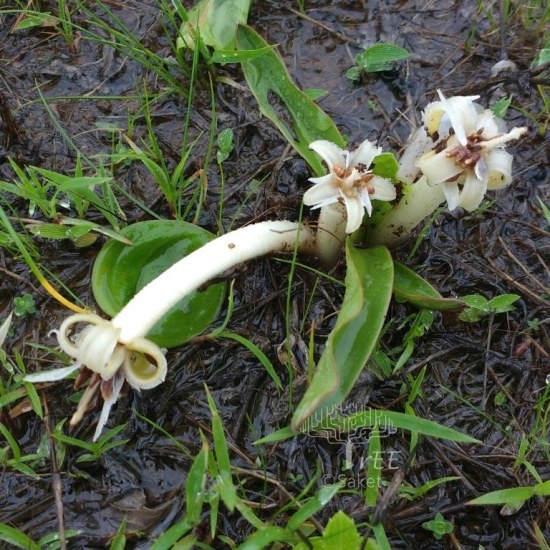
Curcuma caulina J.Graham is endemic to the Northern Western Ghats of Maharashtra, India. This rhizomatous geophyte, commonly known as the arrowroot lily or Indian arrowroot, produces edible starch from its tubers and displays a distinctive inflorescence along a leafy stem. It thrives in seasonally dry tropical environments and is currently classified as Endangered on the IUCN Red List. Height range: 3-4 ft.

Curcuma pseudomontana J.Graham is a rhizomatous perennial herb of the ginger family, commonly known as Hill Turmeric. It thrives in seasonally dry tropical habitats on hilly terrains of India, particularly within the Western Ghats and central India. This species is currently assessed as Vulnerable by the IUCN, reflecting concerns over habitat loss. Height range: 2-3 ft.

Dipcadi montanum (Dalzell) Baker is a bulbous geophyte belonging to the Asparagaceae family, notable for its erect habit and basal leaf clustering. It is distributed in the northern Western ghats and is typically found on rocky slopes and along forest fringes under subtropical conditions.

Drimia indica (Roxb.) Jessop, syn. Urginea indica (Roxb.) Kunth, syn. Drimia zambesiaca (Baker) J.C. Manning & Goldblatt, syn. Urginea zambesiaca Baker, ranges from the coastal parts of northern KwaZulu-Natal and northern Namibia through east and central tropical Africa to Mauritania, and India. Known as Indian Squill, it is a bulbous, scapigerous herb renowned for its medicinal properties. It grows in dry deciduous forests and on rocky, sandy soils across several regions of the Indian subcontinent (as well as parts of Indo-China), where its bulbs are traditionally harvested for therapeutic uses.
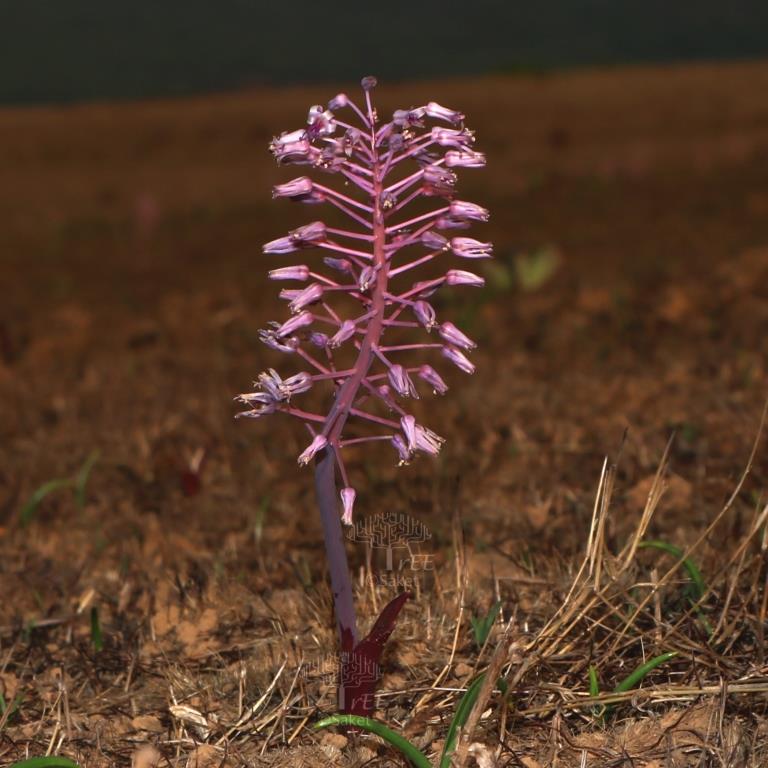
Habenaria brachyphylla {Lindl.) Aitch., syn. Habenaria crassiflora A.Rich. is found on rocky or grassy slopes in parts of western India (especially in Maharashtra) at mid elevations around 900-1200 m. It exhibits thick, fleshy leaves alongside a modest raceme of white flowers. Height range: 20-50 cm.
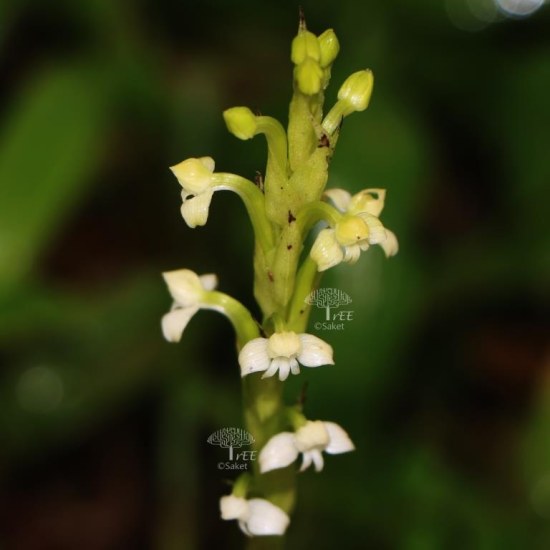
Habenaria digitata Lindl. is a terrestrial, tuberous orchid characterized by greenish-white, intricately lobed flowers and a robust, leafy stem. It typically occupies moist, subtropical to tropical habitats across the Indian subcontinent. Height range: 20-60 cm.

Habenaria grandifloriformis Blatt. & McCann is native to the tropical Indian subcontinent. It is commonly recorded from the Western Ghats (including states like Gujarat, Maharashtra, Kerala, etc.) This striking ground orchid bears broad, showy white flowers arranged in terminal racemes and grows on open scrub and grassland habitats. The species is currently assessed as Near Threatened. Height range: 10-30 cm.

Habenaria heyneana Lindl., a delicate terrestrial orchid with a slender, leafy stem and finely lobed white flowers, thrives in seasonally dry, sunny sites such as hill slopes and open forest margins. Its distribution is largely confined to southwestern India, particularly within the Western Ghats, where it produces mass flowering displays. Height range: 8-40 cm.

Habenaria longicorniculata J.Graham is notable for its tall, erect habit and a long (~14 cm) spur that accentuates its elegant white flowers. This tuberous orchid grows along moist forest edges and in open grasslands. It occurs primarily in southwestern India with isolated records from central and north India. Regional assessments have indicated a vulnerable status owing to its fragmented distribution. Height range: 30-80 cm.

Habenaria rariflora A.Rich. is endemic to parts of the Western Ghats, India. It is a rare component in its habitat and has been reported as endangered on a regional scale. This small, compact terrestrial herb bears a sparse raceme of white flowers and narrow, linear leaves. It is adapted to well-drained, rocky soils. Height range: 15-25 cm.

Habenaria suaveolens Dalzell. now includes Habenaria panchganiensis Santapau & Kapadia. It is a tuberous, ground-dwelling orchid distinguished by its entire, lanceolate petals and a relatively short spur. It flowers on high-altitude plateaux and hilltops with open, moist soils. Endemic to the Western Ghats crestline of Maharashtra, its restricted and patchy distribution has led to its status as endangered. This description is for what was previously known as H. panchganiensis. Height range: 8-27 cm.
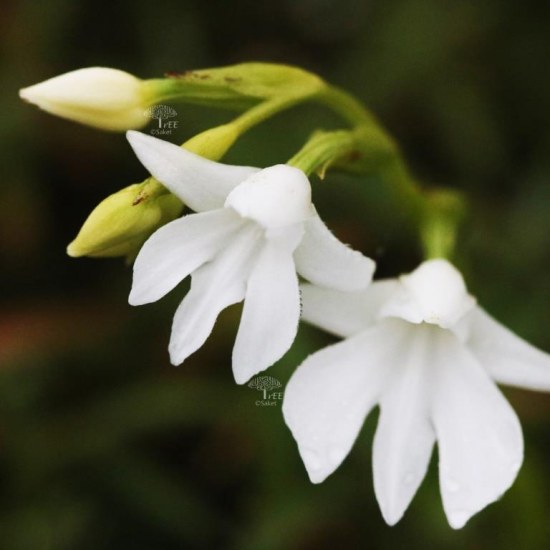
Iphigenia stellata Blatt. is a geophytic, ephemeral herb endemic to the northern Western Ghats of India, recognizable by its star-like spreading rays and modest inflorescence. It typically thrives in high-altitude open grasslands and rocky plateaus with lateritic and basaltic soils. Due to its fragmented distribution and habitat degradation from anthropogenic activities, it is assessed as Endangered on the IUCN Red List.

Pecteilis gigantea (Sm.) Raf. is a robust terrestrial, tuberous orchid noted for its large, fragrant white flowers arranged in terminal racemes, sometimes reaching up to 90 cm in height. It grows in moist, subtropical habitats across the Indian subcontinent and extending into Myanmar, where it typically occupies grasslands and forest clearings.

Peristylus densus (Lindl.) Santapau & Kapadia is a slender terrestrial orchid with a loose inflorescence of small, white to pale green flowers and narrow, oblong lanceolate leaves. It is recorded from tropical habitats in Western Ghats, where it often occurs in forest understories and along grassland margins. Height: to about 55 cm. Peristylus_densus_ss.jpg" Peristylus densus, Saket Shrotri"
Zingiber officinale Roscoe, commonly known as ginger, is a perennial rhizomatous herb prized for its aromatic and spicy underground stem used in culinary, medicinal, and cosmetic applications. Native to Asia, it is widely cultivated and has naturalized across many warm, moist regions of the world. Height range: 2-4 ft. Photograph and text provided by Saket Shrotri.
