There are about 163 species of Gladiolus (with new ones being discovered) in the area south of the Tropic of Capricorn and including Botswana, Lesotho, Namibia, South Africa, Swaziland, and Mozambique. Some are found in winter rainfall areas and some in summer rainfall areas. For more information see Goldblatt and Manning, 1998. Southern African species from A-B are pictured on this page.
Gladiolus index - Southern African gladiolus Ca - Southern African gladiolus Ce-E - Southern African gladiolus F-H - Southern African gladiolus I-Me - Southern African gladiolus Mi-Pa - Southern African gladiolus Pe-R - Southern African gladiolus S-T - Southern African gladiolus U-Z - Gladiolus Hybrids - Miscellaneous gladiolus
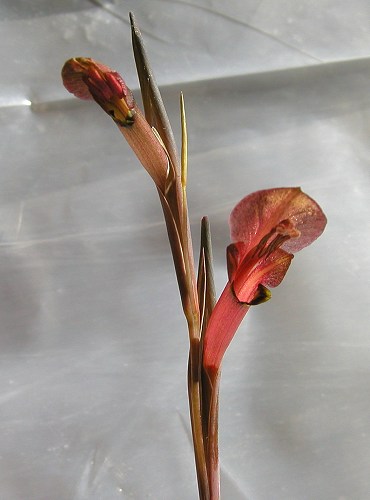
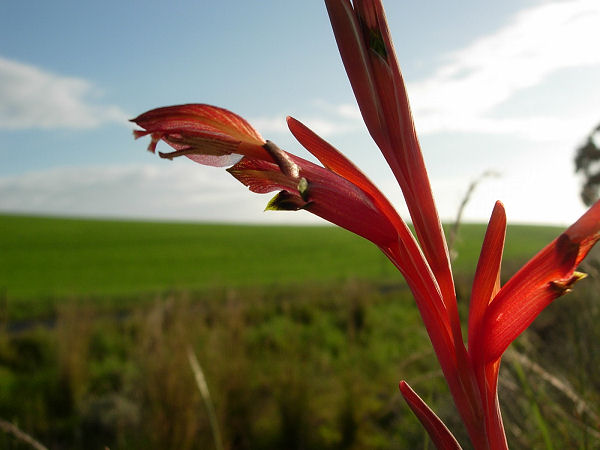
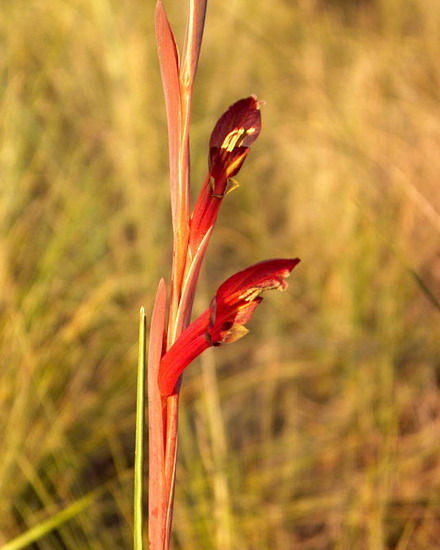
Gladiolus abbreviatus Andrews (syn. Homoglossum abbreviatum) is an odd species with grossly unequal dark red to brown tepals. Height is 30-65 cm. It is pollinated by sunbirds and occurs in the southwestern Cape where it is found in clay and shale banks in renosterveld. Although in the book above it is described as usually having 4 to 6 flowers my plants grown from seed only have a couple and ones seen in the wild also did not have very many flowers. The first photo was taken by Mary Sue Ittner of seed grown plants and the last three in habitat by Cameron McMaster near Napier in the Overberg.

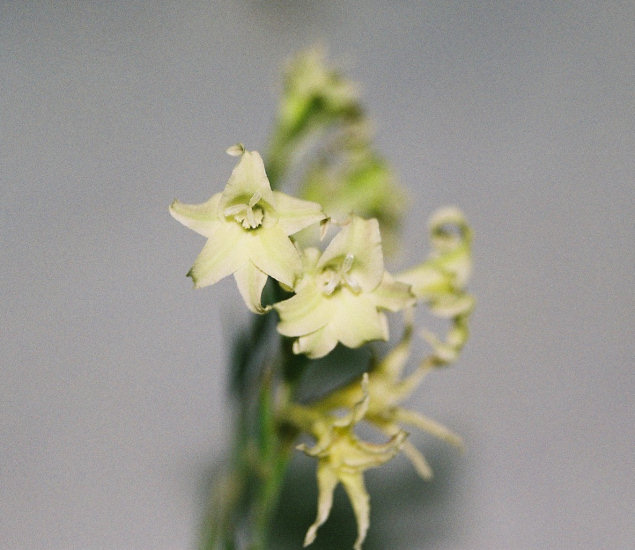
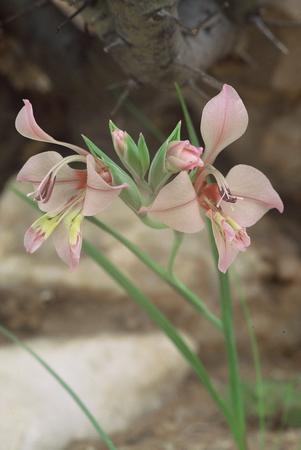
Gladiolus acuminatus F.Bolus is an endangered species known from no more than five locations. It is endemic to the Overberg where it grows in stony shale on flats and in renosterveld. It has a long perianth tube and pale greenish cream fragrant flowers. Height: 25-50 cm. Photo by Alan Horstmann.
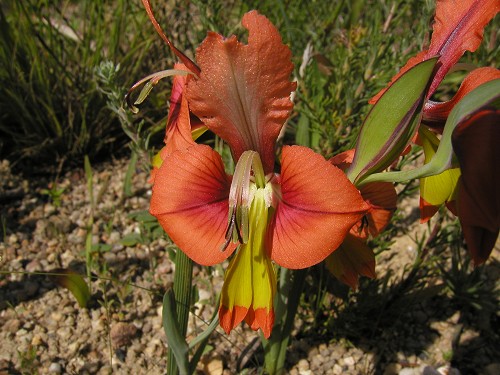
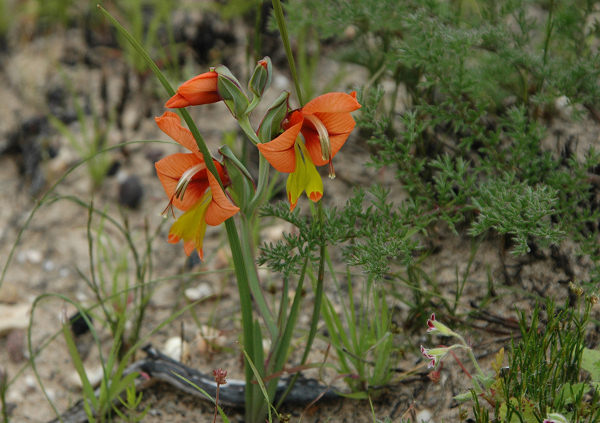
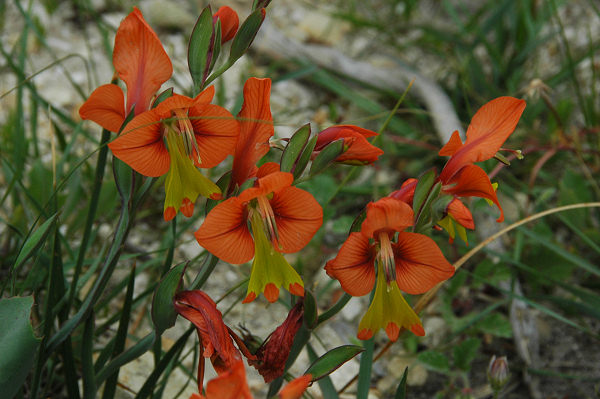
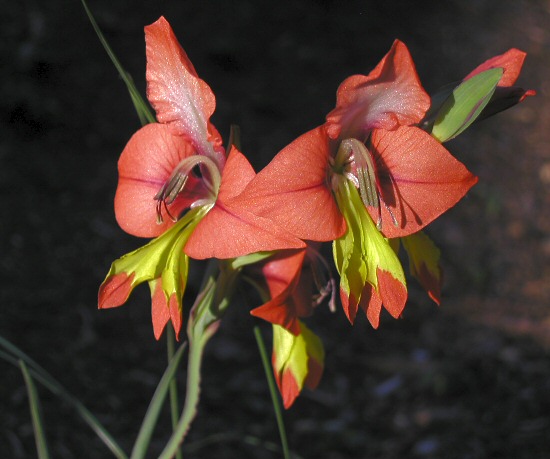
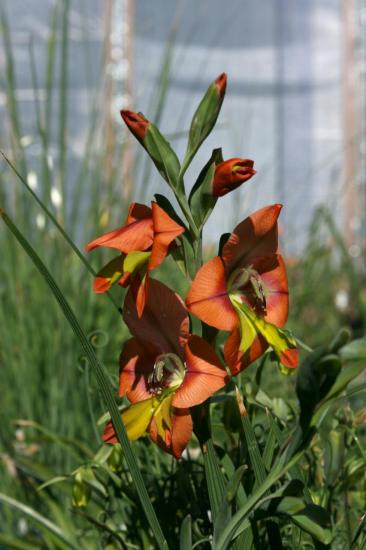
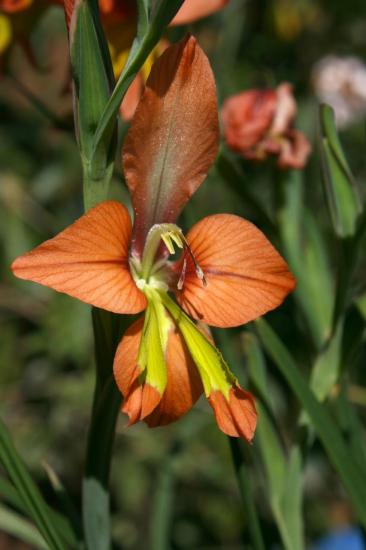
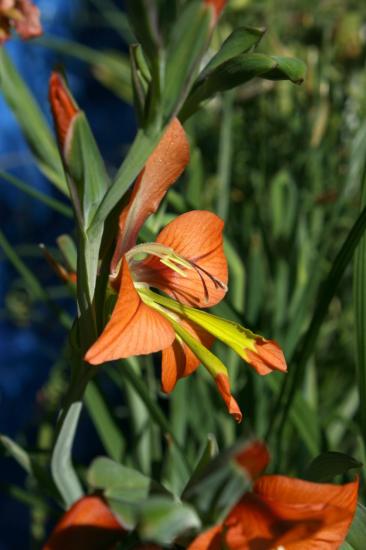
Gladiolus alatus L. is a winter rainfall species found on flats, slopes, and plateaus, mainly in sand. The flowers are orange, marked yellow and have a light and pleasant scent. Height is 8-25 cm high. Photo 1 was taken near Paarl September 2003 by Bob Rutemoeller. The next two pictures were taken by Bob Rutemoeller and Mary Sue Ittner near Bainskloof September 2006.
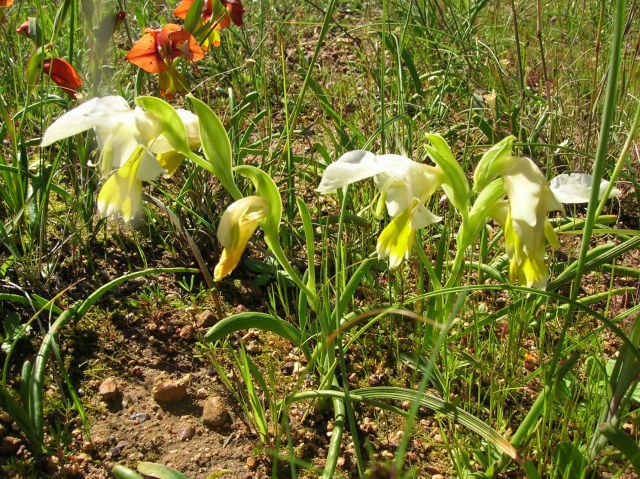
Photos below are a white form of this species. The first photo was taken by Alan Horstmann. The next two photos from Mary Sue Ittner and Bob Rutemoeller were taken near Villiersdorp. The last photo by Bob Rutemoeller shows a white form for sale in a nursery in Caledon.

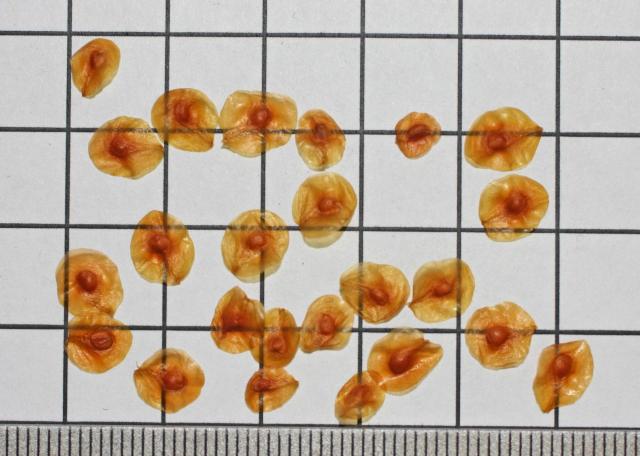
The photos below are of plants in cultivation. Photo 1 by Mary Sue Ittner shows flowers on a plant grown from seed blooming March 2005. Photo 3 from Bob Werra. Photos 3-6 were taken by Nhu Nguyen. Photo 5 show seeds on a 1 cm square grid.

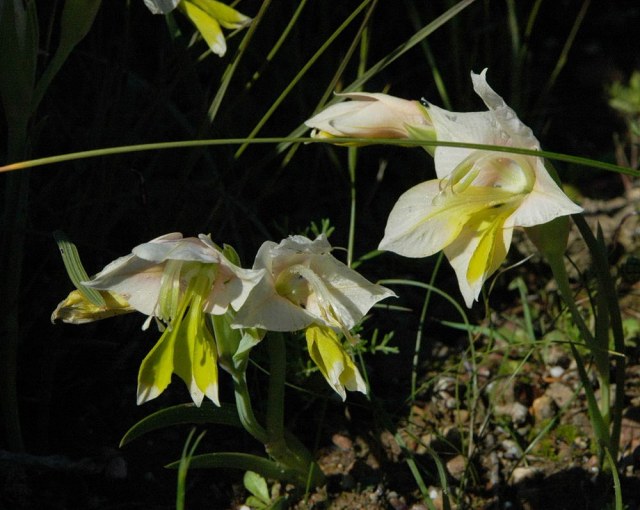
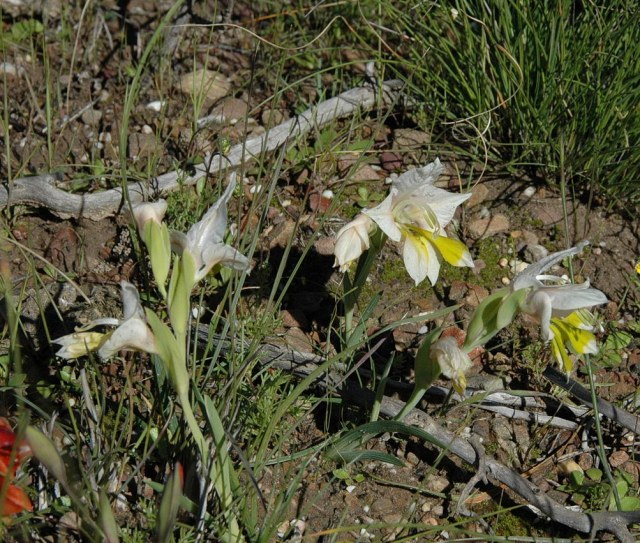
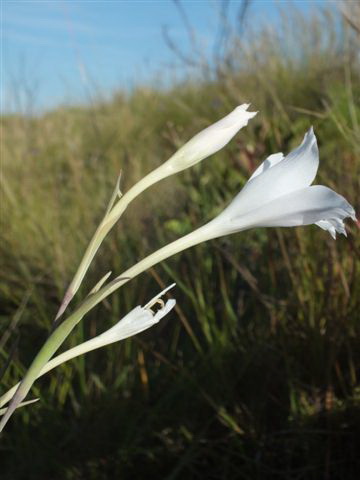
Gladiolus albens Goldblatt & J.C.Manning, syn. Gladiolus maculatus Sweet ssp. eburneus Oberm., is a narrow endemic of the Eastern Cape where it is found on grassy slopes and in fynbos type vegetation on light well drained soils. Although it grows primarily in a summer rainfall zone, the area where it grows does get some winter rainfall and this species flowers in the fall in April and May and has its main growth in winter after flowering. Plants are generally 25 to 50 cm high and the flowering spike has 1 to 3, rarely to 5, flowers. Flowers are white to cream, sometimes with faint speckles or streaks in the throat or all over the tepals, with a long slender perianth tube (35-50 mm) that expands in the upper part and have a dusty sweet scent. Photos taken by Rachel Saunders in the Eastern Cape.
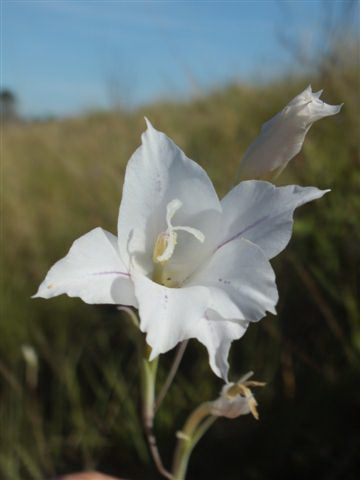

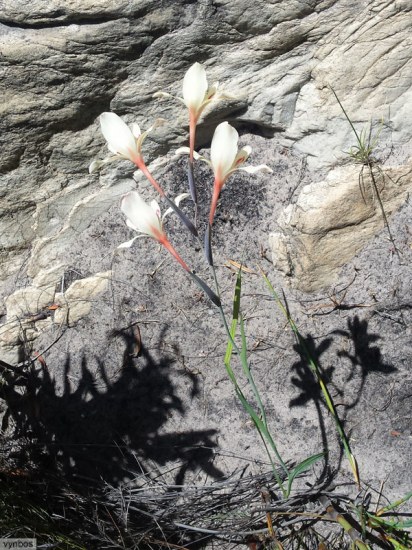
Gladiolus angustus L. is found in wet places on sandstone soils in the southwestern corner of the southern African winter-rainfall region. Growing from 60 to 120 cm high, it flowers in spring (October and November) with cream to pale yellow flowers with diamond spade shaped yellow markings outlined in dark red on the lower tepals. The species has a very long perianth tube, usually 7 to 10 cm, and the lower tepals are substantially shorter than the upper tepals. It is related to Gladiolus carneus and Gladiolus undulatus. The first two photos from Mary Sue Ittner. The next two photos from iNaturalist taken by Chris Vynbos and shared under a CC BY-SA license. The last photo from Rachel Saunders.
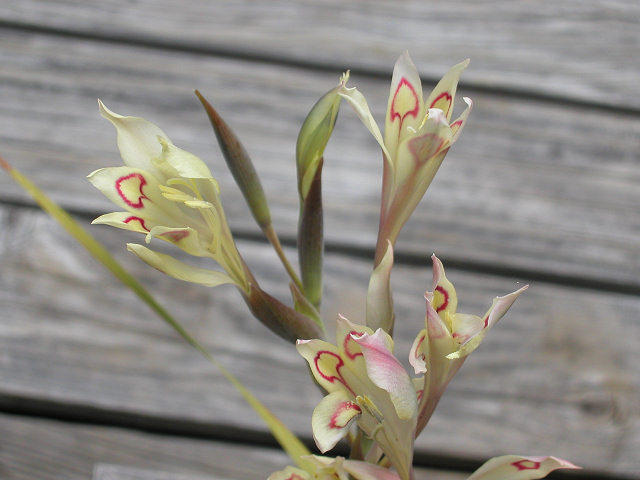
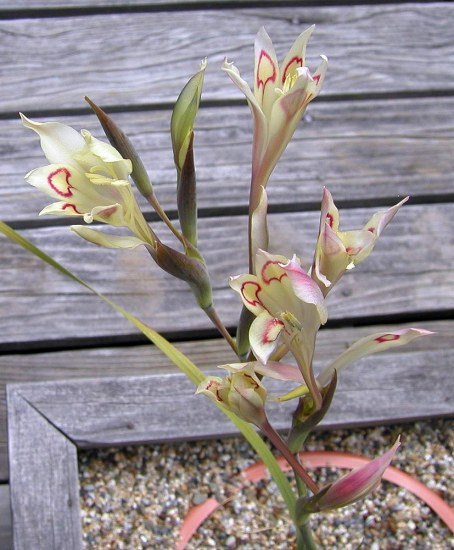
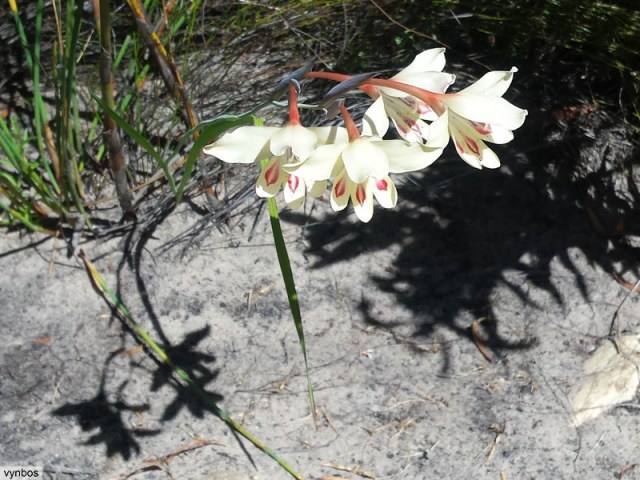
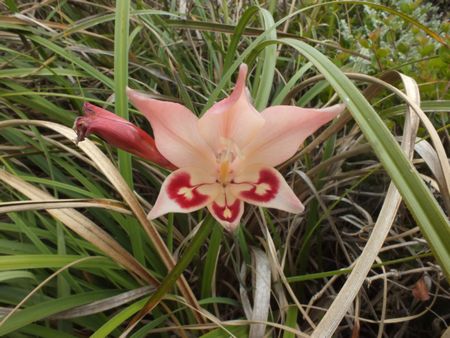
Gladiolus antholyzoides Baker, Early Afrikaner, is distributed across the central and eastern high veld of South Africa. Flowers are yellow, sometimes streaked with red or orange and with an orange ring around the throat. Height range: 60-90 cm. This species is similar to Gladiolus dalenii, but that species has a dorsal tepal that is strongly arched and conceals the anthers. This species was once included in Antholyza as Antholyza schlechteri Baker, presumably because of its long perianth tube. It has also had other Gladiolus species names. Photos from iNaturalist were taken by tjeerd near Pretoria in November and otomys in December in Mpumalanga and shared under a CC BY-NC license.
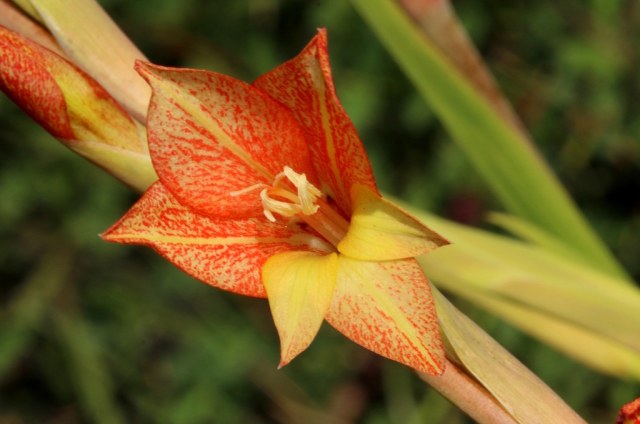
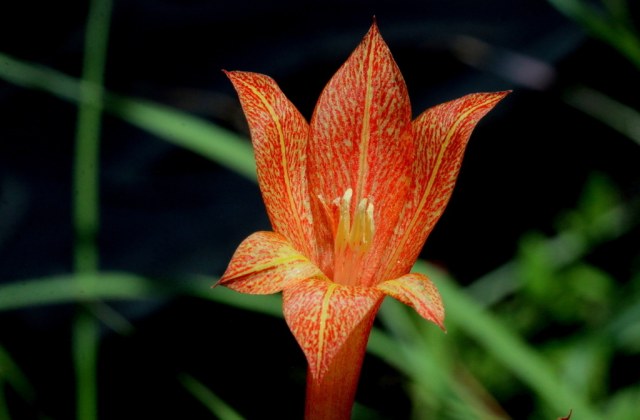
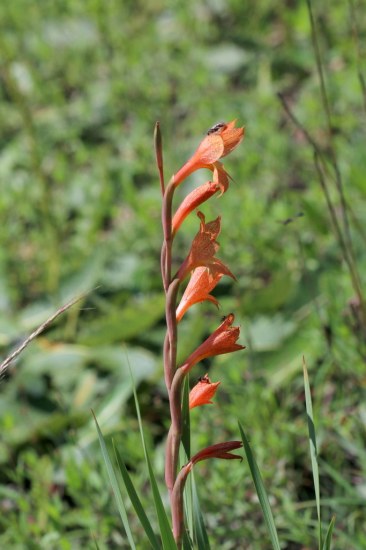


Gladiolus aquamontanus Goldblatt is a local endemic found on streams and wet cliffs in the Swartberg Mountains in the Western Cape. A winter rainfall plant, it grows from 40 to 100 cm, but mostly hangs down where it grows and has sword-shaped grey green evergreen leaves with lightly thickened margins and midribs. The mauve pink flowers are in a 4 to 8 flowered spike. The lower three tepals have a dark purple median streak in the lower two thirds. Flowers are unscented and bloom time is late spring to summer. One of the pbs list members who grows it has found that it never wants to be completely dry. The first photo from Rod Saunders. The next photo from the book Plants of the Klein Karoo courtesy of Jan and Anne Lise Schutte-Vlok.
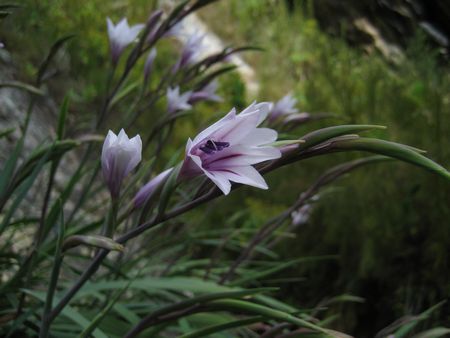

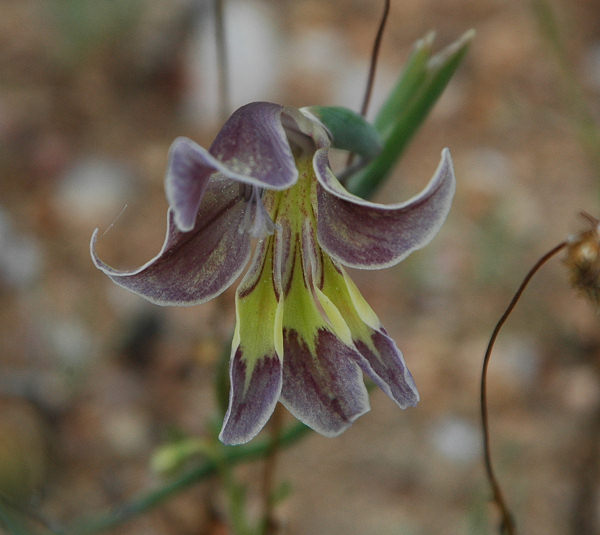
Gladiolus arcuatus Klatt grows in the dry western part of the winter rainfall area of South Africa. In Namaqualand this species grows among low shrubs in granite derived gravel and in fine grained silt in areas to the south. It has flowers that are dull grey purple, brownish or dark purple, with the lower three tepals yellow in the lower two thirds with the distal third dark purple fading to light grey purple. The dorsal tepal is largest, horizontal and arching forward. Flowers are very fragrant and probably pollinated by long tongued bees. Height: 12-20 cm high. The first photo below could be this species. It was seen in early September 2006 in Namaqualand in the right habitat. The second photo taken earlier that year was taken at Rod and Rachel Saunders' property at Brackenfell. They often sprinkle seed about. I think it also could be this species. Photos 1-2 taken by Mary Sue Ittner. Photo #3 taken by Rod Saunders.
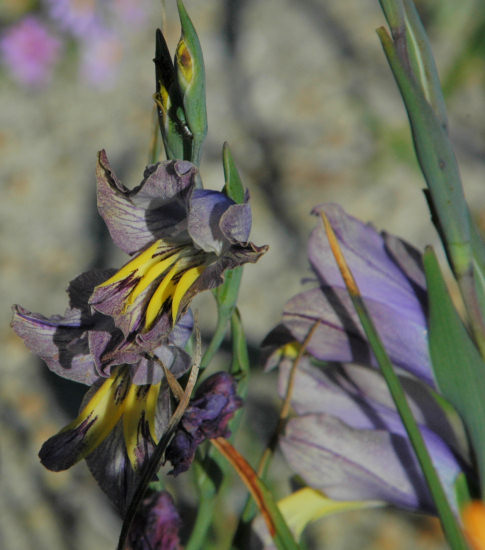
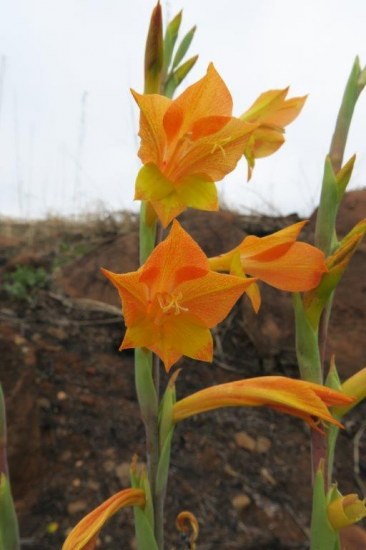
Gladiolus aurantiacus Klatt is found in the summer rainfall area often growing in high grassland and is centered in KwaZulu-Natal extending into Mpumalanga and Swaziland. Growing from 45 to 75 cm high, it has stem leaves with short blades and foliage leaves with longer blades that are produced on separate shoots near the end of flowering. The unscented flowers are yellow, dotted or streaked with red or orange which gives them the appearance of being orange borne on a 10 to 16 flowered erect spike. Flowers have an elongate flower tube, slender in the lower half. The dorsal tepal is slightly ascending to horizontal and the lower tepals with yellow blotches in the lower half curve sharply downward. Flowers are adapted for pollination by sunbirds. Flowering is unusual as it occurs early, mostly in September and October, before the main rainy season has started. Photo from Rachel Saunders.
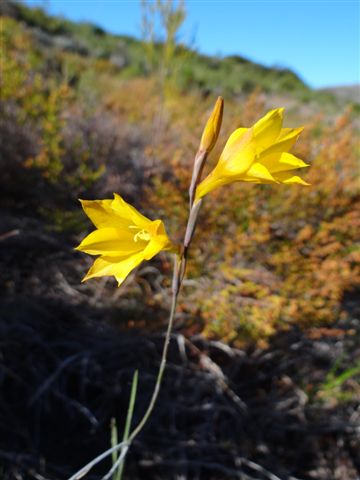
Gladiolus aureus Baker is endangered. It is found in the wild today in only a single location, a peaty seep on a rocky sandstone slope in the Southwest Cape. There are reportedly as few as ten plants remaining at this location. It has bright yellow flowers. Height: 30-50 cm. The first photo was taken by Rachel Saunders August 2012 at its only known locality. There were five flowering plants surrounded by alien vegetation, houses and destruction. Photos 2-4 were taken by Bob Werra and the last photo by Michael Mace.
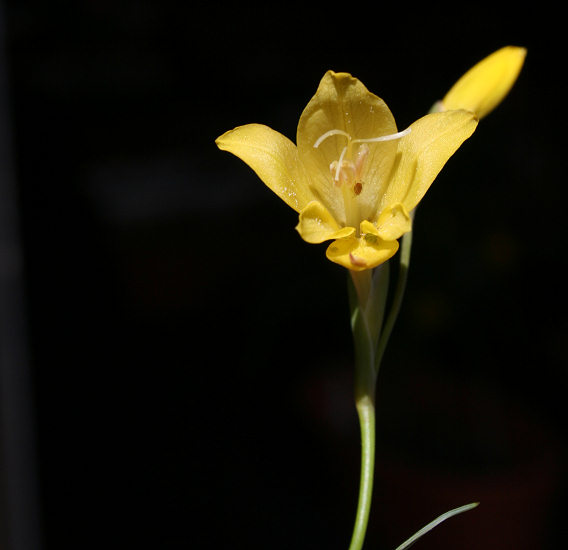
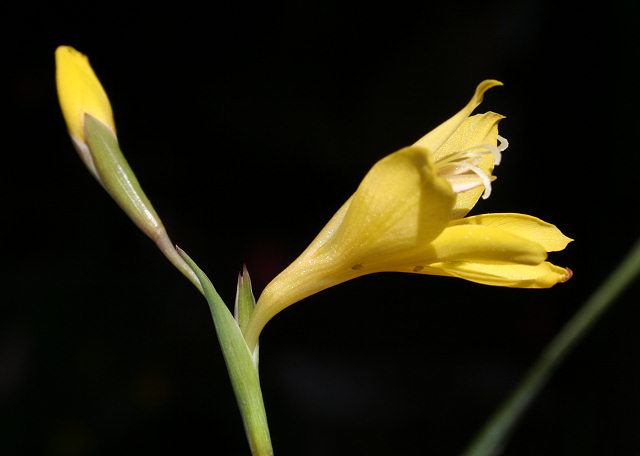
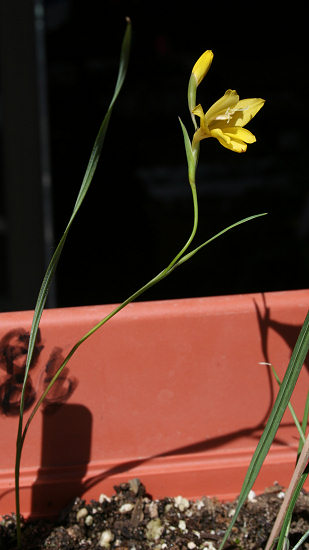
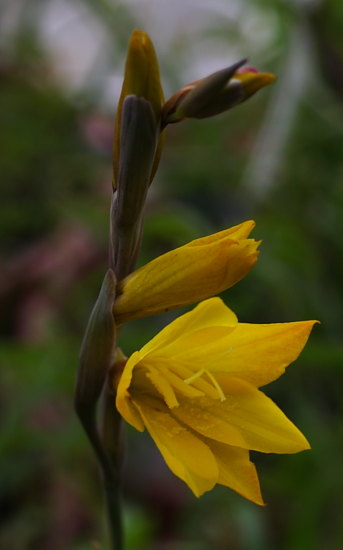
Additional information and photos from Ernie DeMarie: I grew three plants from seed that was refrigerated for well over a decade that came from the annual seed distribution of the Botanical Society of South Africa, which unfortunately they no longer do for international members. This species is not self compatible so when all three plants bloomed I was able to cross them and set a good amount of seeds. I distributed seeds or young corms to growers in California, South Africa, Australia, and Argentina in the hopes that this species could be maintained in cultivation as it is gravely endangered at its one locality on the Cape Peninsula.
Gladious aureus is not especially difficult to grow under my conditions but corms can exhaust themselves if they set a lot of seed. It will usually flower the third year from seed. It appears to reproduce mainly by seed; thus far I have not seen evidence of abundant cormlet production as happens with most other gladiolus species. It blooms in February for me. Being a small plant it can be managed under lights more easily than many other gladioli species.
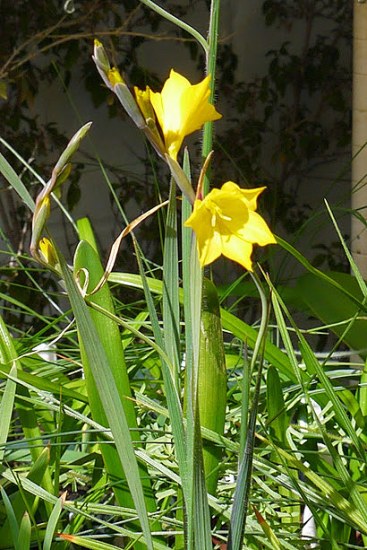
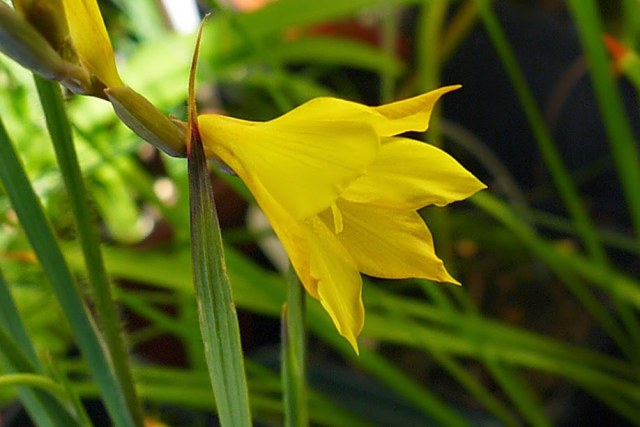
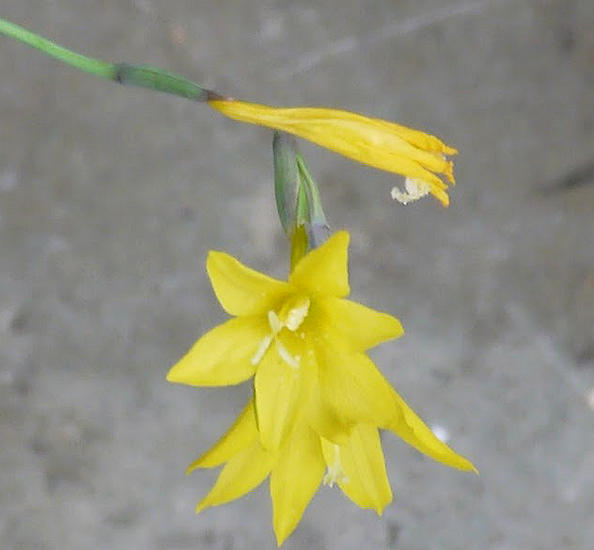
Gladiolus bilineatus G.J.Lewis grows in clay and loamy sand in the fynbos in the Langeberg Center (Southern Cape.) Growing from 20 to 40 cm and flowering March-April, this species has short sword shaped leaves and cream to pink flowers with reddish lines near the base of the lower tepals in a one to three flowered spike. Photos taken March 2016 near Swellendam by Rachel Saunders.
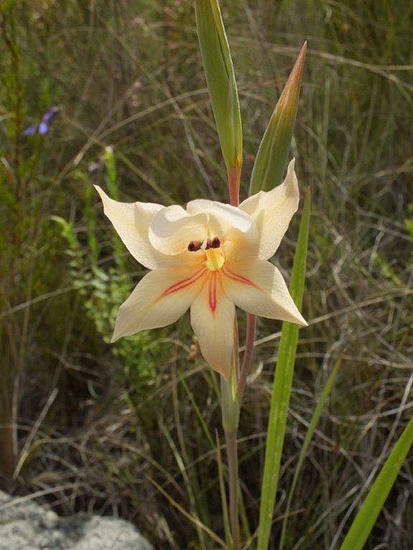
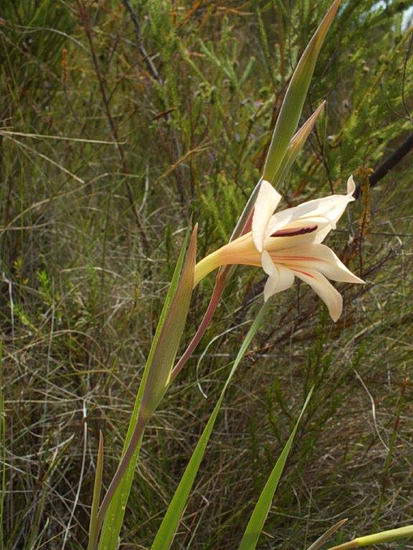
Gladiolus blandus Aiton is a synonym of Gladiolus carneus F.Delaroche. Below are a few representative photos taken in the wild, the first by Cameron McMaster in the Overberg and photos two and three by Andrew Harvie in Table Mountain National Park. Photo four is from the book Plants of the Klein Karoo courtesy of Jan and Anne Lise Schutte-Vlok.
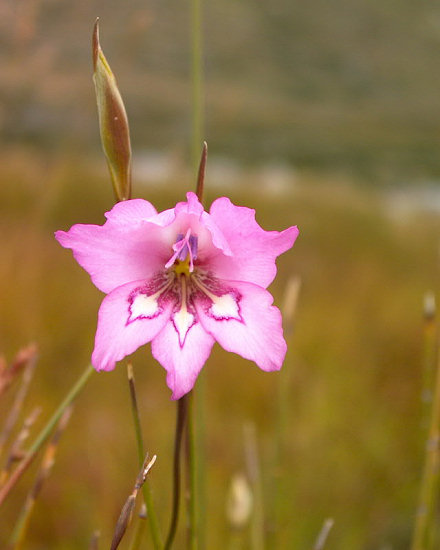
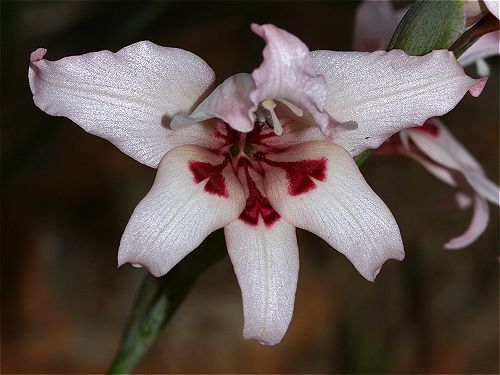
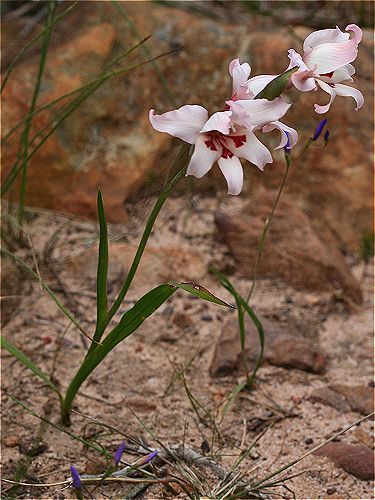
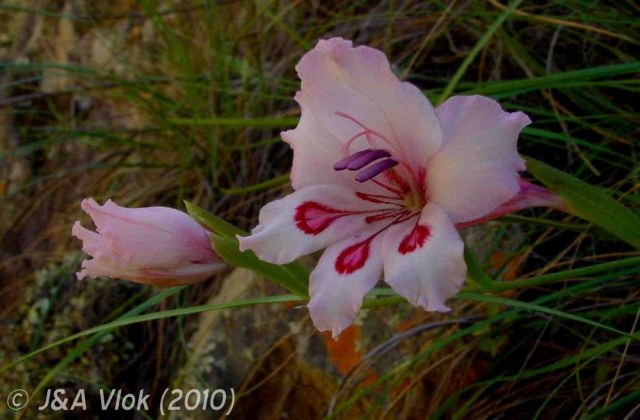
Gladiolus blommesteinii L.Bolus is found on sandstone slopes in fynbos in the southwest Cape. It blooms August to October and grows from 30 to 60 cm high. Flowers are in a one to four flowered inclined spike, mauve or pink with dark longitudinal streaks on the lower tepals. Photo taken in habitat by Rachel Saunders.
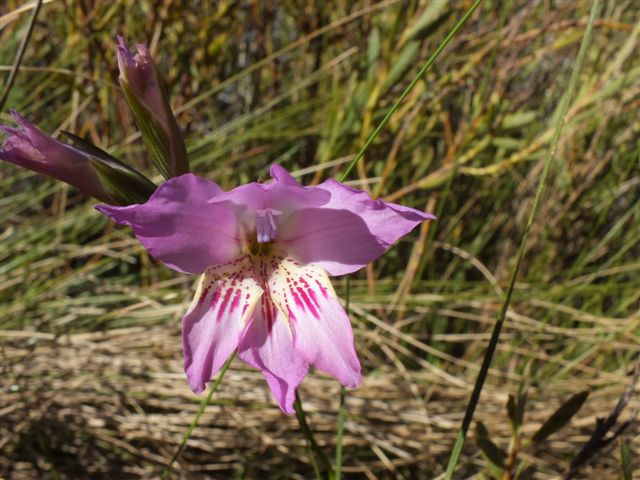
Gladiolus brevifolius Jacq. blooms in fall before producing leaves and has small pink, gray or brownish flowers with yellow markings on the lower tepals. Plants grow 20-50 cm tall. It is found on sandstone and shale slopes in the north and south western Cape, South Africa. The first two photos of garden grown plants by Mary Sue Ittner and Bob Rutemoeller. The third photo was taken by Rod Saunders. The last picture was taken near Napier in the Overberg by Cameron McMaster.

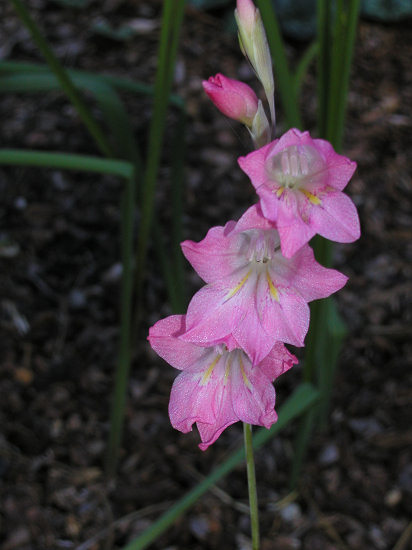
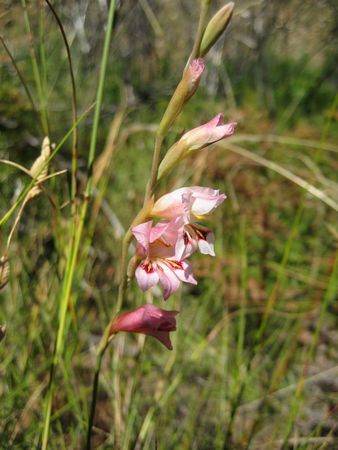
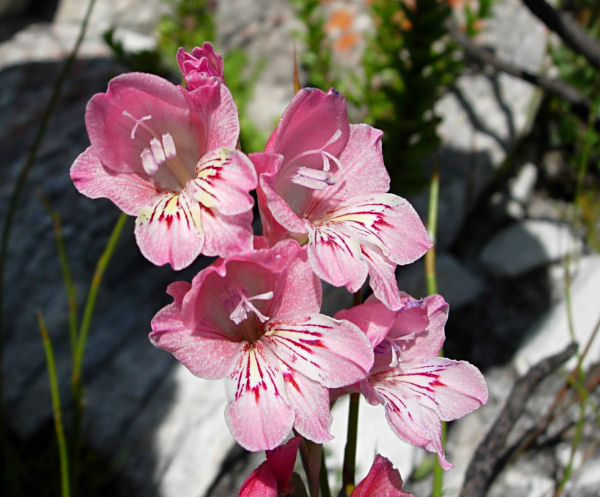
Gladiolus brevitubus G.J.Lewis grows on rocky sandstone slopes in the Southwestern Cape and flowers in spring. Plants grow from 12 to 35 cm high. Flowers are unusual, resembling a Tritonia, orange with yellow markings at the base of the lower tepals. Leaves are linear with lightly thickened margins and midribs. The photo was taken December 2013 by Rachel Saunders on steep slopes in the mountains near Hermanus.
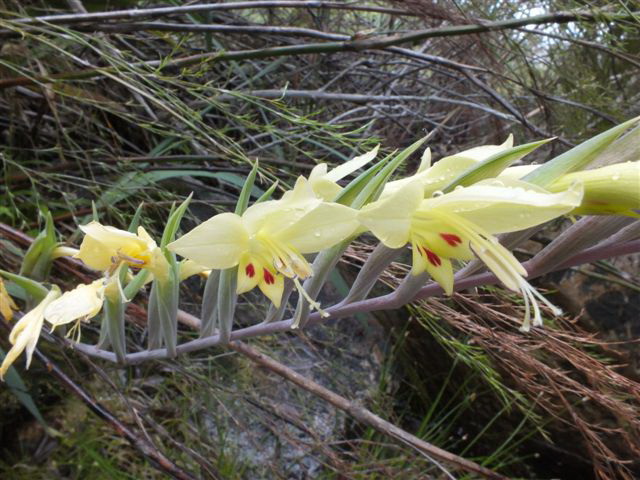
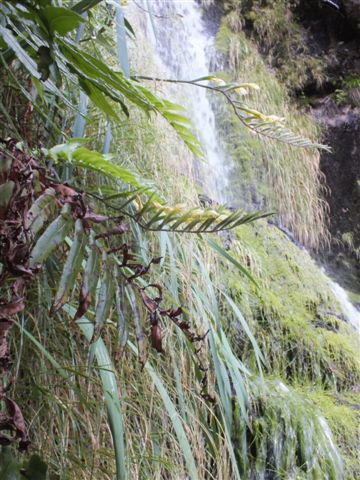
Gladiolus buckerveldii (L.Bolus) Goldblatt is a species restricted to a few sites along permanent rivers in the northern Cederberg of the western Cape. Plants grow out of nearly vertical moss covered cliffs. Growing from 80 to 125 cm, it has a horizontal spike of 12 to 20 ivory to greenish cream flowers, each with a spade or heart shaped dark red mark in the center of the lower tepals. It flowers in summer. In the past it was included in Antholyza as Antholyza buckerveldii because of its elongate floral tube (wide and cylindric above and slender below) and then was moved to Petamenes. In 1971 it was included in Gladiolus. Photos taken January 2014 by Rachel Saunders. It was growing on a cliff next to a waterfall.
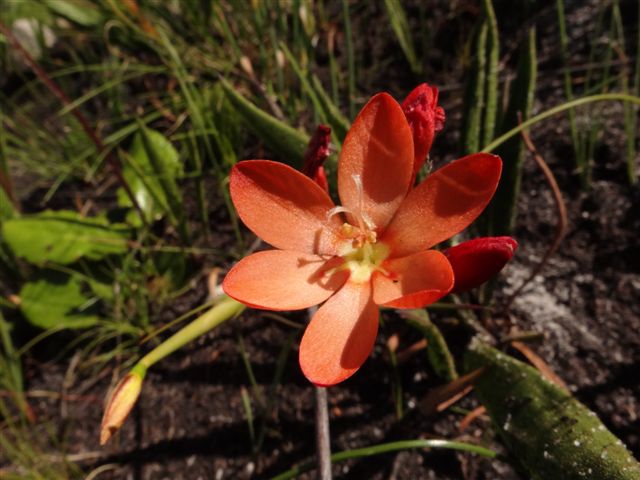
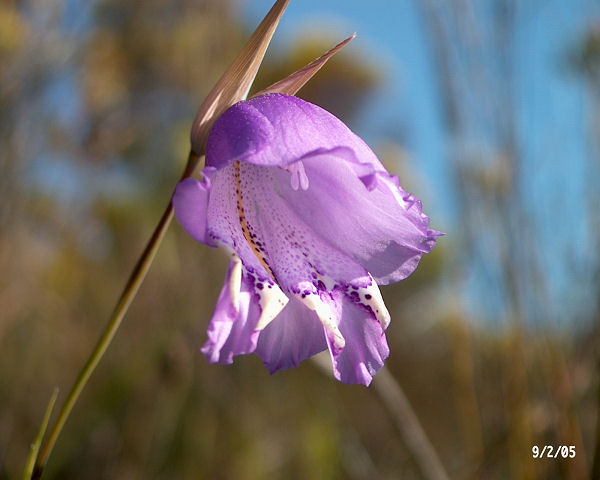
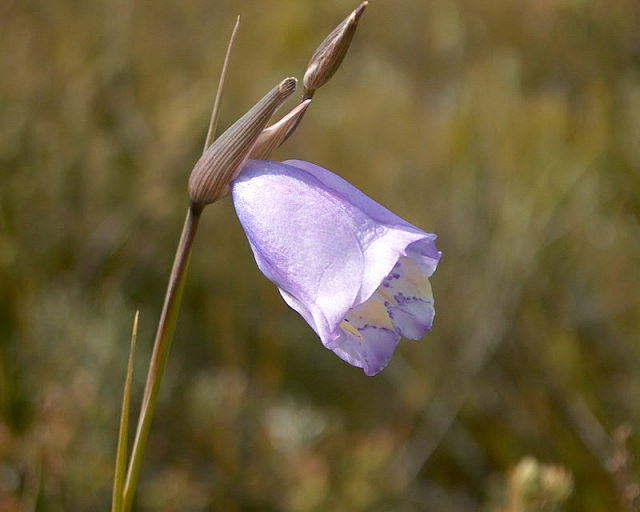
Gladiolus bullatus Thunb. ex G.J.Lewis is found on sandstone slopes in fynbos in the southwest Cape and the Agulhas plain. This species is reported to be difficult in cultivation. It has bell-like blue flowers with yellow markings and is hooded. Height: 50-80 cm. The first photo by Bob Rutemoeller was taken at Boskloof, the second and third by Cameron McMaster in the Overberg, and the last a close-up from Alan Horstmann.


Gladiolus index - Southern African gladiolus Ca - Southern African gladiolus Ce-E - Southern African gladiolus F-H - Southern African gladiolus I-Me - Southern African gladiolus Mi-Pa - Southern African gladiolus Pe-R - Southern African gladiolus S-T - Southern African gladiolus U-Z - Gladiolus Hybrids - Miscellaneous gladiolus