Arthropodium is a genus that has been considered to be in many different families. It is sometimes included in a broader Liliaceae family or in the Anthericaceae family. The Angiosperm Phylogeny Group II, 2003 suggests that it could optionally be included in the Agavaceae or the Asparagaceae family. In the APG III classification system it is included in Asparagaceae. It is from the Southern Hemisphere with species from Australia, New Zealand, New Guinea, New Caledonia, and Madagascar. Some of the species have been moved back and forth between Dichopogon, differentiated because of their smooth instead of fringed filaments, and this genus. Although they are now considered to belong to Dichopogon by Kew and Plants of the World Online some Australian sources including Flora of Australia Online list them in this genus. Rootstocks are rhizomes, often with tuberous roots that last a couple of seasons and are produced new each year. Many of the species are probably not very hardy, but are quick to grow and bloom from seed. The seeds have a short viability and no germination trigger, although late winter planting and watering seems to give the best results.
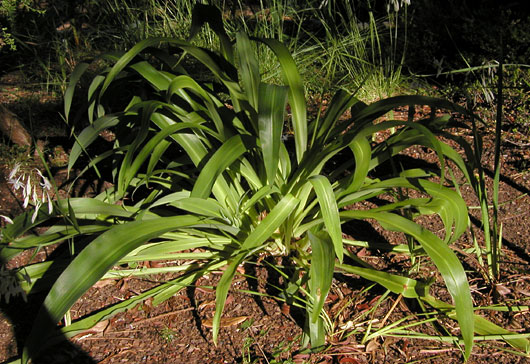
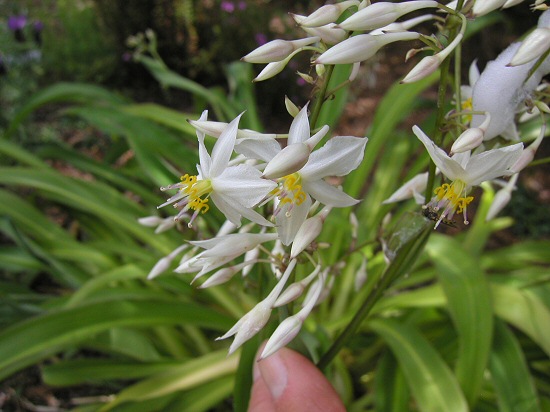
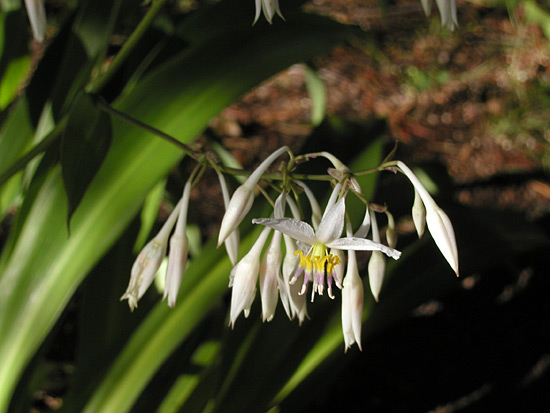
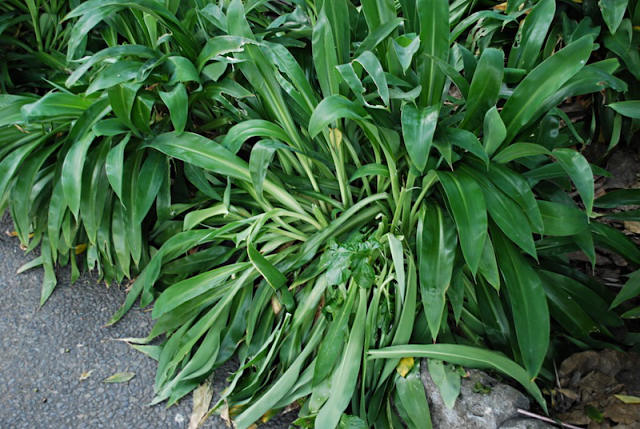
Arthropodium cirratum (G.Forst.) R.Br. commonly known as a Rock Lily is native to New Zealand. It is evergreen with bright green strap-shaped foliage and showy small white, tinged purple, pendant flowers in early summer. This plant grows easily in Northern California in shade, but needs some water year round. Snails and slugs are very fond of it. Cut flower last about a week and in bud stage can be air dried. It can be propagated from seed or division. Height range: 1-3 ft. Photographs by Bob Rutemoeller and Mary Sue Ittner show the plant growing in our garden and a close-up of the flowers. The last photo from Kiyel Boland shows a plant growing in the gardens where he works in New Zealand.
Arthropodium fimbriatum R.Br. is one of the disputed species. Height range: to about 1 m. Information from Australia on this plant is found here and on the wiki listed under Dichopogon fimbriatus.
Arthropodium milleflorum (Redouté) J.F.Macbr. has fleshy, fibrous, tuber-like roots. It is native to Australia where it grows in moist, well drained soils in hilly and rocky areas. It has tufted leaves and small pale lilac, mauve, or white flowers. It is quick from seed and only dormant briefly in late summer, early fall. The flowers although small are very beautiful. Height range: to about 1 ft. Photos from Mary Sue Ittner show the flowers in bud and starting to set seed and the last the leaves.
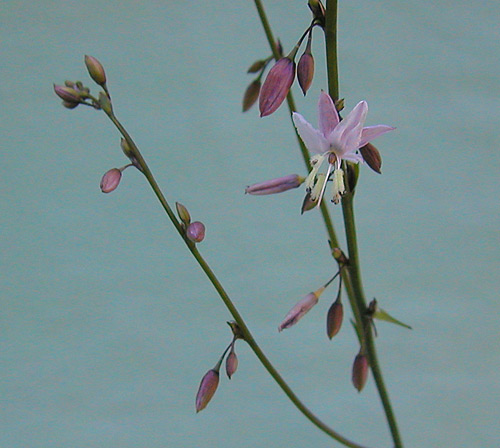

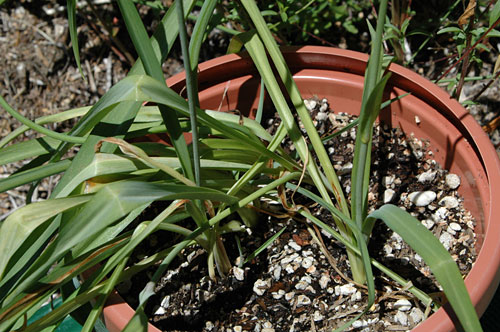
Arthropodium strictum R.Br. is one of the disputed species. For more information see Dichopogon strictus.