Androcymbium Willd. was a genus in the Colchicaceae family found in Africa and the Mediterranean. Taxonomic changes by Manning, Forest & Vinnersten (2007) suggested that Androcymbium be included in Colchicum L. and this has been accepted in 2025. The common names for species in the genus were cup-and-saucer and men-in-a-boat. There were about 40 species with 13 of them in the Cape Floral province. Species in this genus had few erect flowers on short pedicels and were usually in a head overtopped by green or petaloid bracts. We are keeping this page since so many people may still be growing them under their old names or consulting reference books that list them under those names. There will be links to this page from the main Colchicum page.
Colchicum austrocapense (U.Müll.-Doblies & D.Müll.-Doblies) J.C.Manning & Vinn.), syn. Androcymbium austrocapense U.Müll.-Doblies & D.Müll.-Doblies, is native to South Africa. Height: to about 15 cm. Austrocapense means from the Southern Cape. Photo by Gottfried Milkuhn.
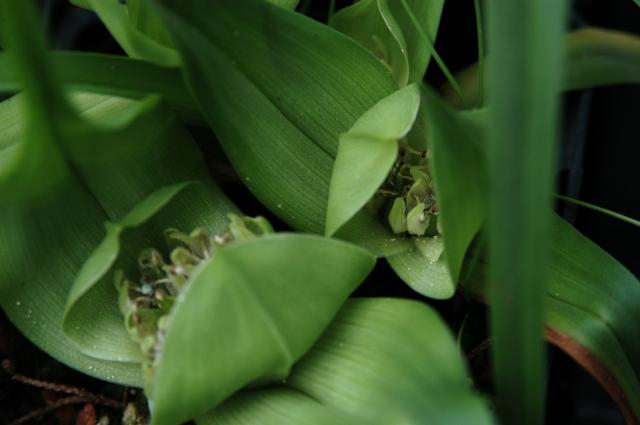
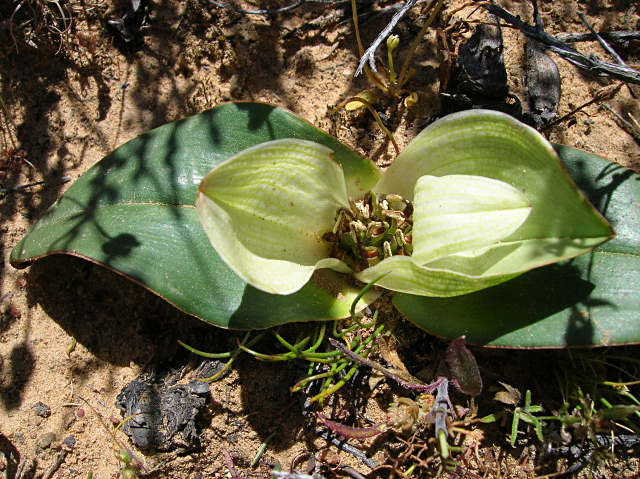
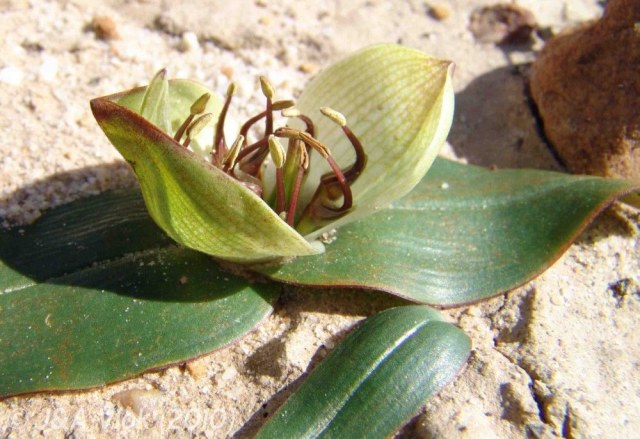
Colchicum burchellii (Baker) J.C.Manning & Vinn., syn. Androcymbium burchellii Baker, syn. Colchicum coloratum ssp. burchellii (Baker) J.C.Manning & Vinn in 2025 is accepted. The same is true of the two subspecies. The first, ssp. burchellii, is found on stony clay flats in the western Karoo, Bokkeveld Mountains to the Little Karoo. It is a prostrate plant with ovate white to green bracts and creamy white flowers sometimes tinged with red, July to September. Height: about to 15 cm. The first one was photographed on the road to Middlepos in August 2001 by Mary Sue Ittner and the next two in the Roggeveld September 2006 by Bob Rutemoeller and Mary Sue Ittner. The fourth photo was taken by Alan Horstmann. The last photo from the book Plants of the Klein Karoo courtesy of Jan and Anne Lise Schutte-Vlok
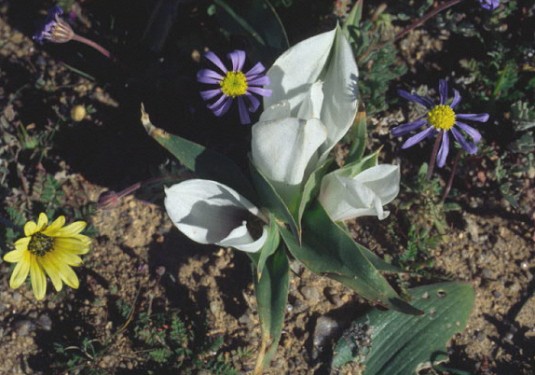
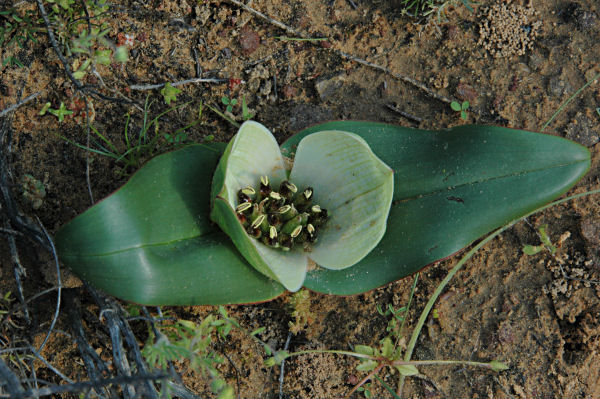
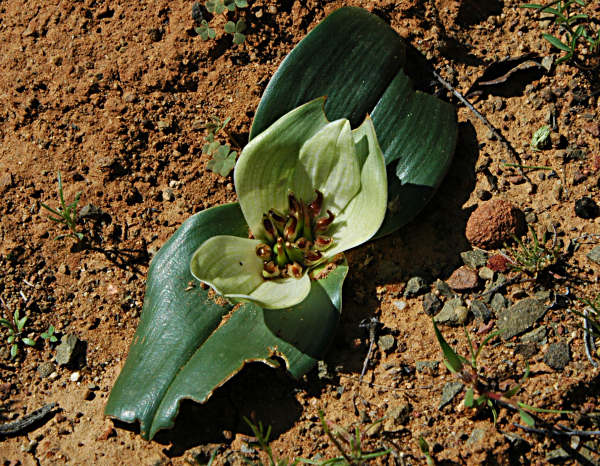
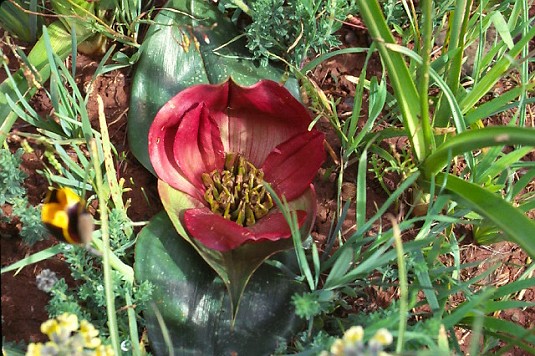
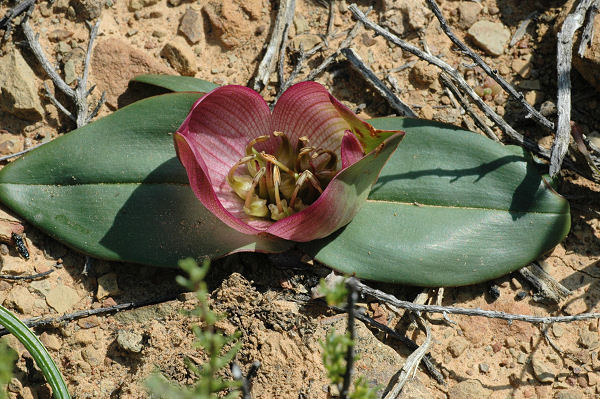
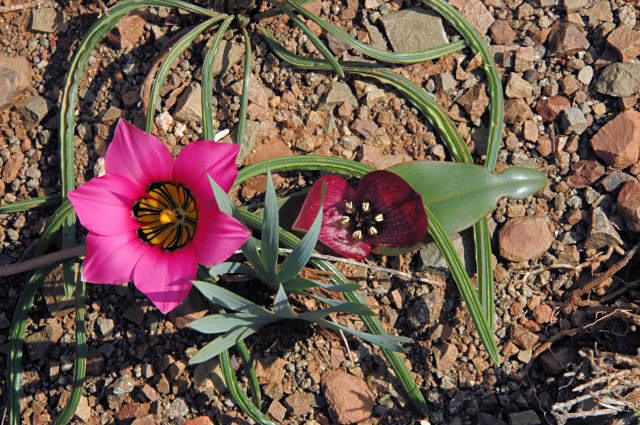
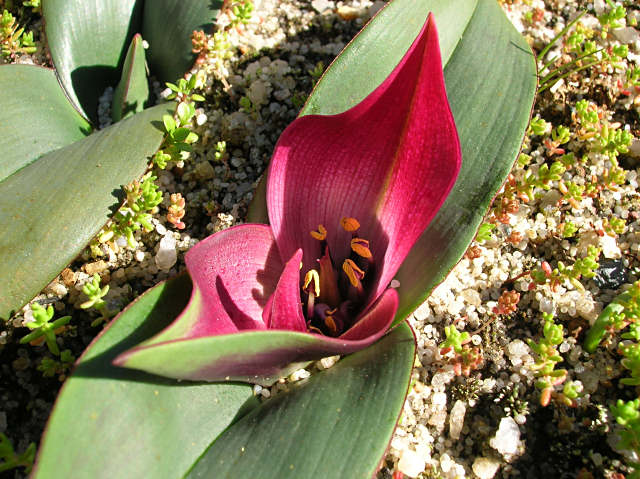
The second, Colchicum burchellii ssp. pulchrum (Schltr. & K.Krause) J.C.Manning & Vinn., syns. Androcymbium latifolium Schinz, Androcymbium burchellii subsp. pulchrum (Schltr. & K. Krause) Pedrola, Membrives, J.M.Monts. & Caujapé, Androcymbium pulchrum Schltr. & K. Krause, and Colchicum coloratum J.C. Manning & Vinn. has 2 lance-shaped leaves and flowers enclosed in large reddish bracts. The first photograph below was taken by Mary Sue Ittner August 2001 in the Nieuwoudtville Reserve where it was growing in heavy red doleritic clay and the second and third photos were taken by Bob Rutemoeller near Middelpos in the Roggeveld September 2006. The third photo shows this species blooming with Romulea subfistulosa. The last photo was taken by Alan Horstmann.
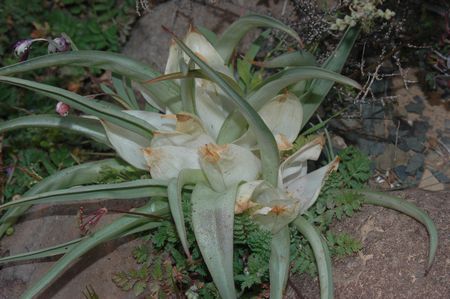
Colchicum capense (L.) J.C.Manning & Vinn., syn. Androcymbium capense (L.) Druce, is a stemless plant found on clay or loam flats from Namaqualand to the western Karoo and Swellendam, South Africa. Flowers are enclosed in large white bracts, sometimes striped green. Photo 1 was taken by Rod Saunders and photo 2 was taken by Gottfried Milkuhn of a plant in cultivation.
Colchicum capense ssp. ciliolatum (Schltr. & K. Krause) J.C. Manning & Vinn., syn. Androcymbium ciliolatum Schltr. & Krause, is found throughout Namaqualand in sandy, often moist places, southwards to Piketberg. The 2 lanceolate basal leaves, up to 15 cm long, have a minutely fringed margin and are at ground level. The clusters of many white flowers are surrounded by pale green, almost white bracts. The first photo was taken by Alan Horstmann in Namaqualand August 2021. Photos 2-3 were taken by Bill Dijk.

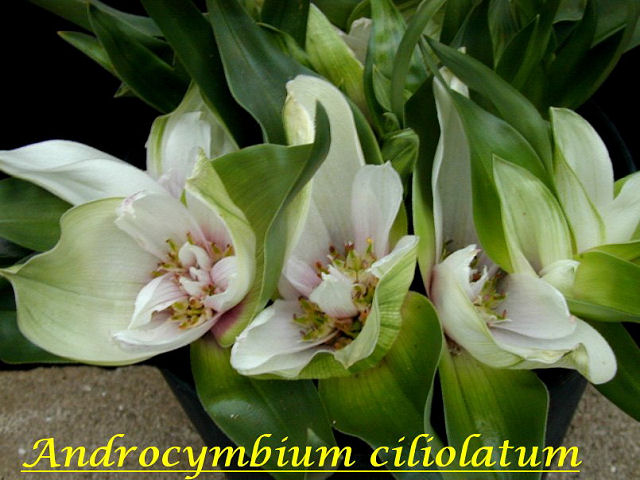
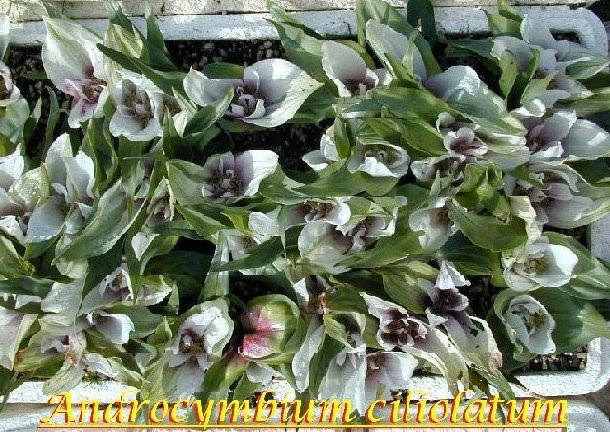
The photos below were taken by Gottfried Milkuhn.
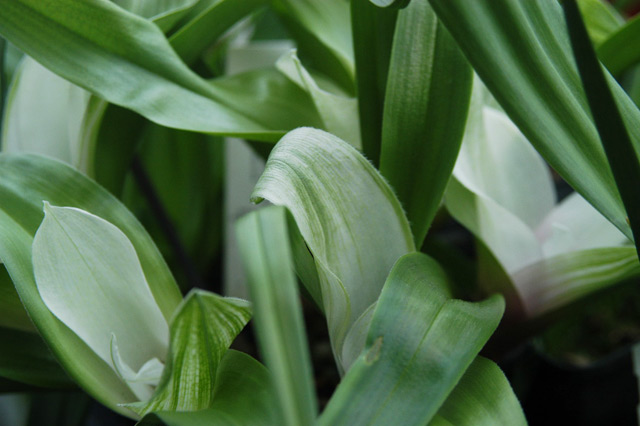
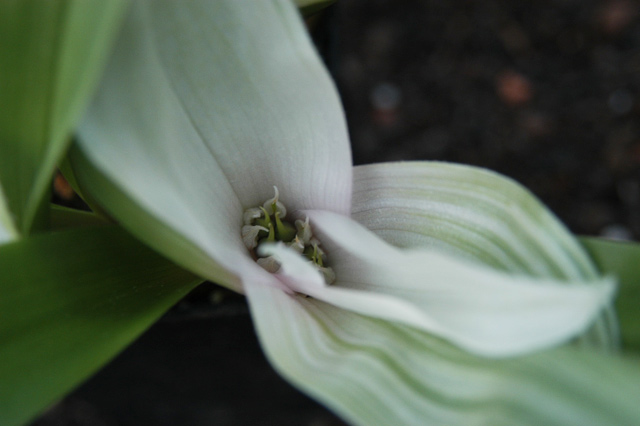
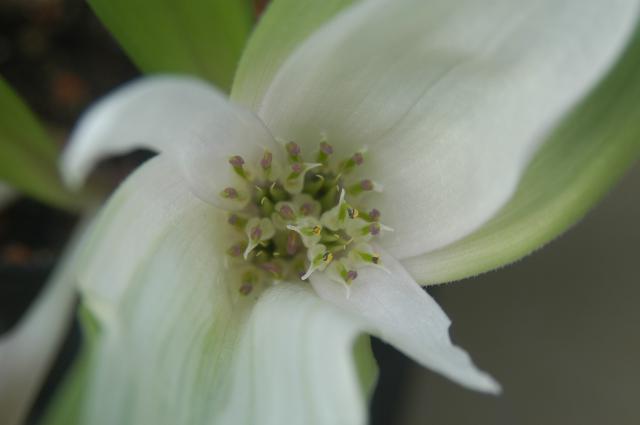
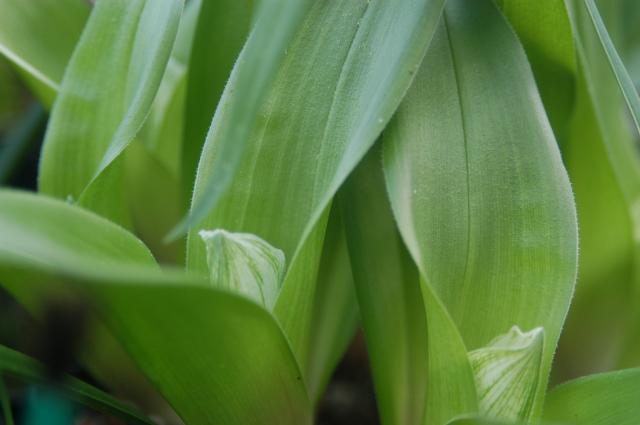
Colchicum cuspidatum (Baker) J.C.Manning & Vinn., syn. Androcymbium cuspidatum Baker, is a widespread South African species that occurs throughout the Little Karoo and from the Cedarberg Mountains to Uniondale. It has three leaves, flat on the ground, and small bracts that vary from green to purple-brown. Height: 15 cm. Photo from the book Plants of the Klein Karoo courtesy of Jan and Anne Lise Schutte-Vlok.
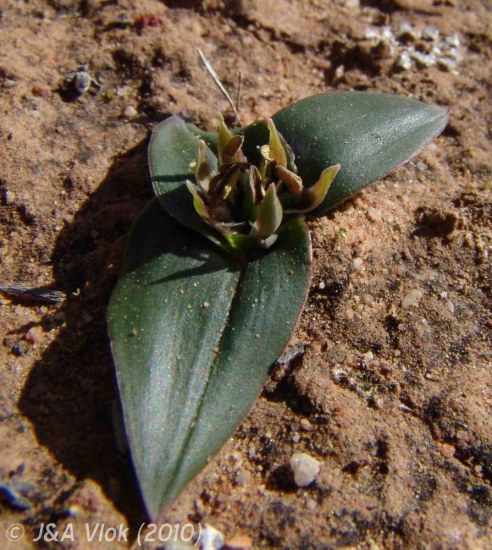
Colchicum dregei (C. Presl) J.C. Manning & Vinn., syn. Androcymbium dregei Presl, is found on sheltered rock outcrops from Namaqualand to the Karoo. It flowers in winter. Height: 15 cm. Photo by Alessandro Marinello
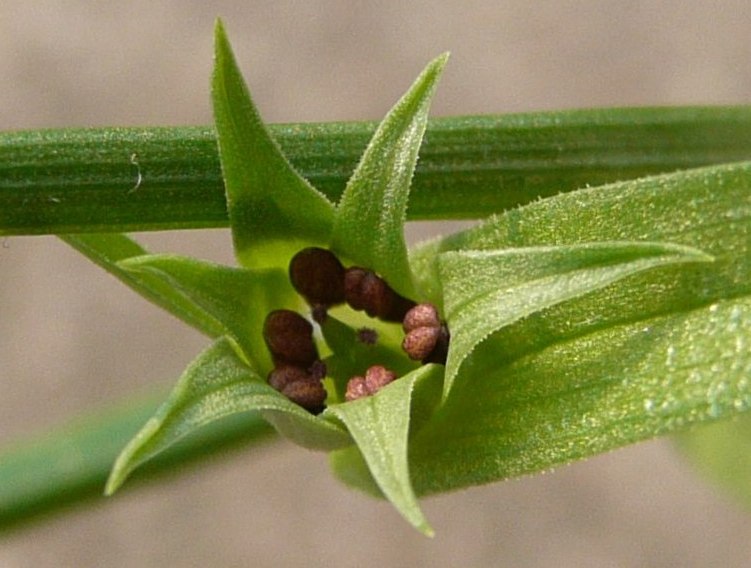
Colchicum eucomoides (Jacq.) J.C.Manning & Vinn., syn. Androcymbium eucomoides (Jacq.) Willd, is a South African species distributed from Namaqualand to the Eastern Cape. Green bracts, turning creamy white, surround the flowers. The first photo from the book Plants of the Klein Karoo courtesy of Jan and Anne Lise Schutte-Vlok. The last two photos below were taken by Gottfried Milkuhn of plants in cultivation.
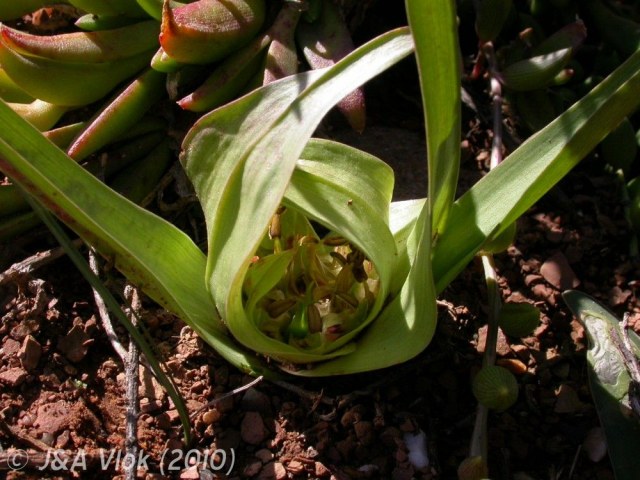

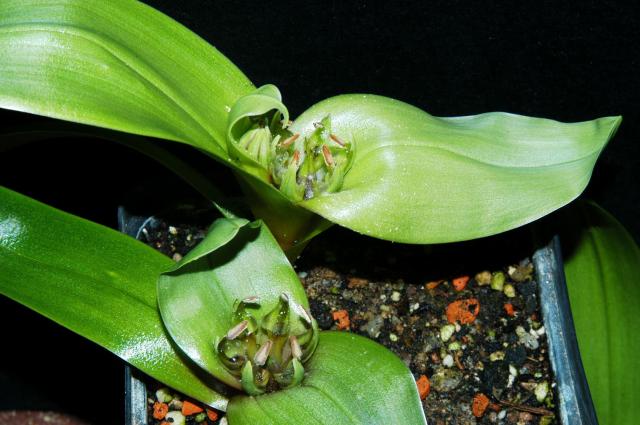
Colchicum europaeum (Lange) J.C.Manning & Vinn., syn. Androcymbium europaeum (Lange) K.Richt., is native to southeastern Spain to northwestern Morocco. Height: about 15 cm. The photo below was taken by Gottfried Milkuhn of a plant in cultivation.
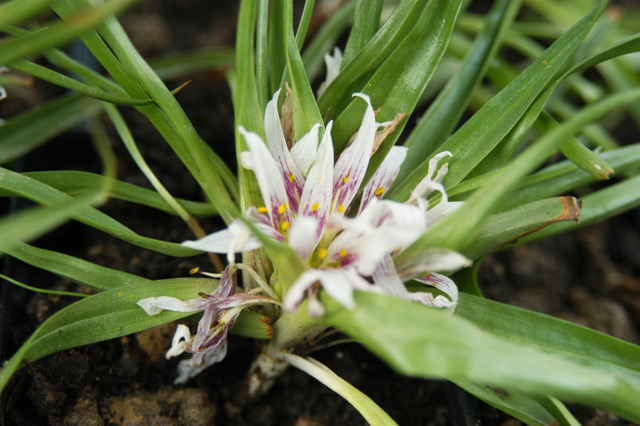
Colchicum irroratum(Schltr. & K.Krause) J.C.Manning & Vinn., syn. Androcymbium irroratum Schltr. & K.Krause, is native to the Western Cape Province, South Africa. Height range: 10-30 cm. The photos below were taken by Gottfried Milkuhn of plants in cultivation.
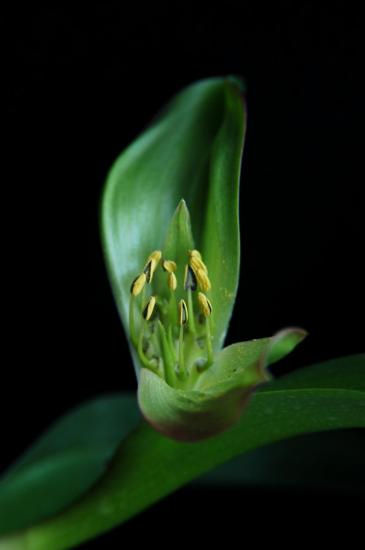
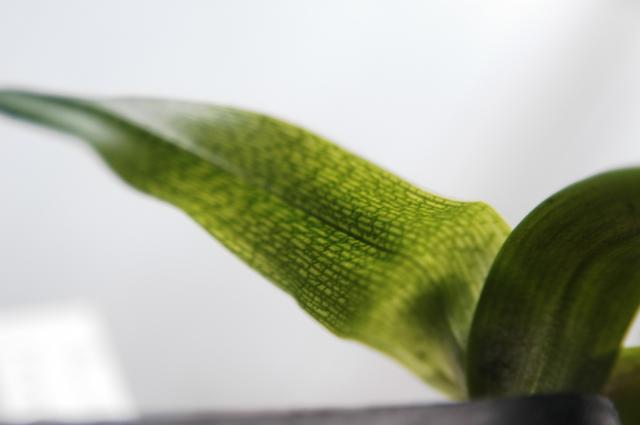
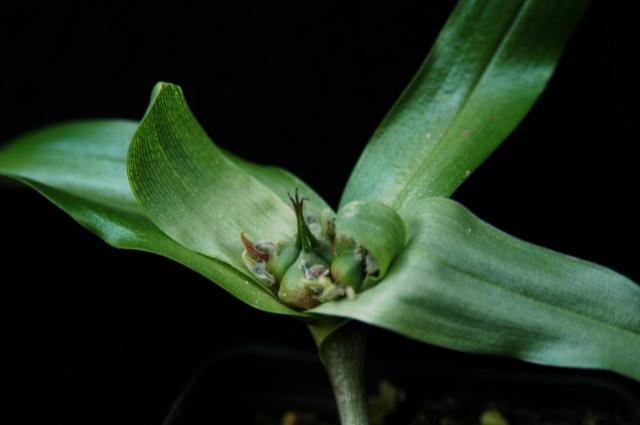
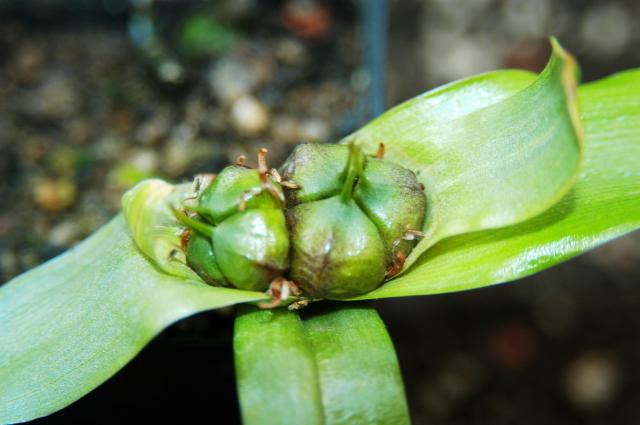
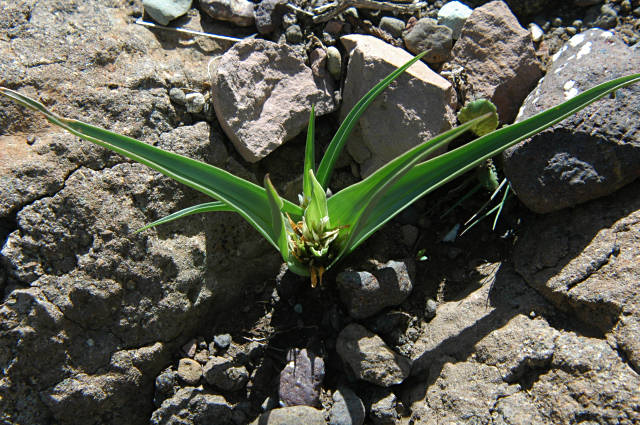
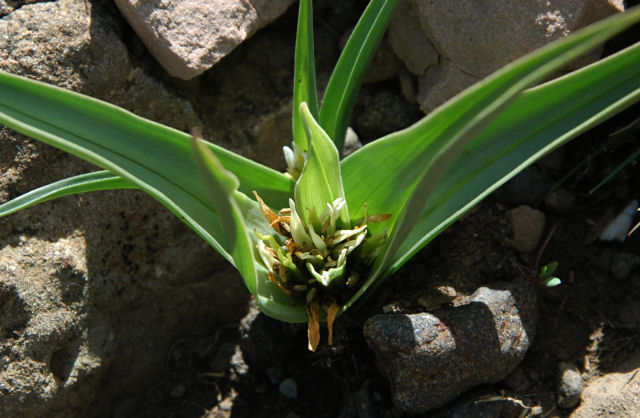
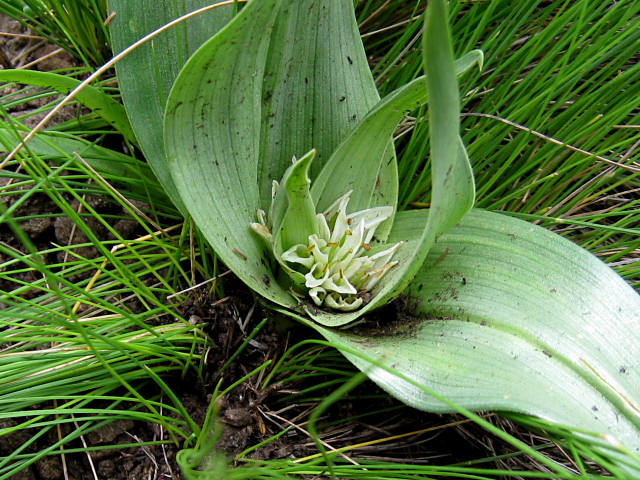
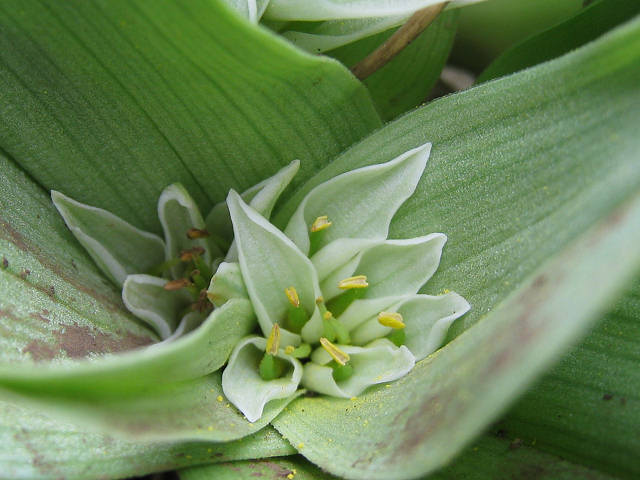
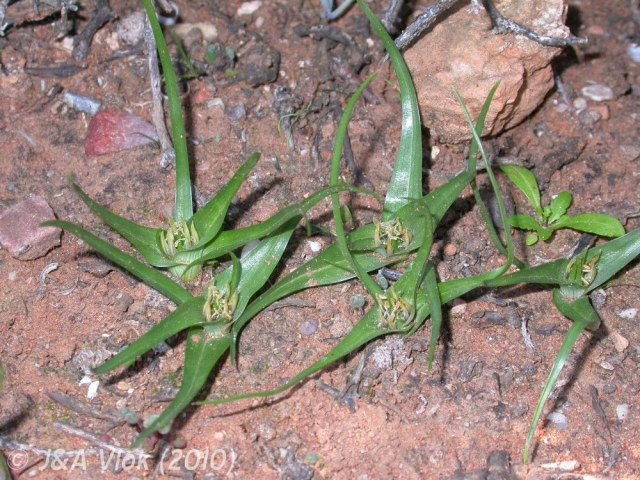
Colchicum longipes (Baker) J.C. Manning & Vinn., syn. Androcymbium longipes Baker, is found in moist slopes and stony grasslands from the Karoo to the Eastern Cape. It has lanceolate channeled leaves and greenish-yellow flowers clustered between leaf-like bracts. Height: about 30 cm. Photos were taken by Bob Rutemoeller, Mary Sue Ittner and Cameron McMaster at Naude's Nek and Tiffendell in the Drakensberg Mountains in the Eastern Cape. The last photo from the book Plants of the Klein Karoo courtesy of Jan and Anne Lise Schutte-Vlok.
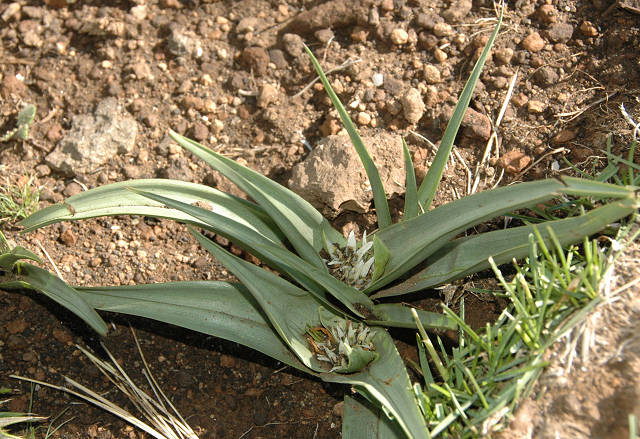
Photos by Gottfried Milkuhn show the species in cultivation.
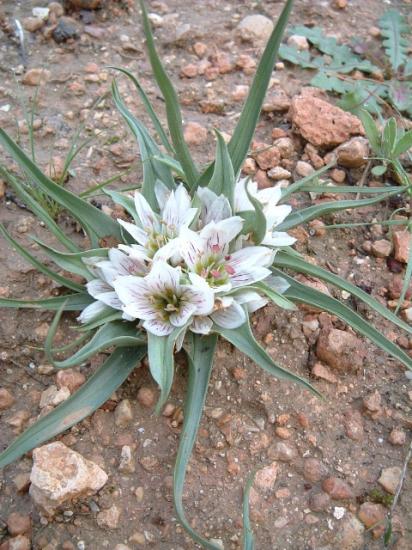
Colchicum palaestinum (Baker) C.Archer, syn. Androcymbium palaestinum Baker, is the only representative of this genus in the Eastern Mediterranean. Despite being small in size, it is a showy plant. Each flower lasts for a few weeks. It grows on white limestone soils in dry, semi-desert conditions. Height: about 30 cm. Photos taken by Oron Peri in the Jordon Valley.
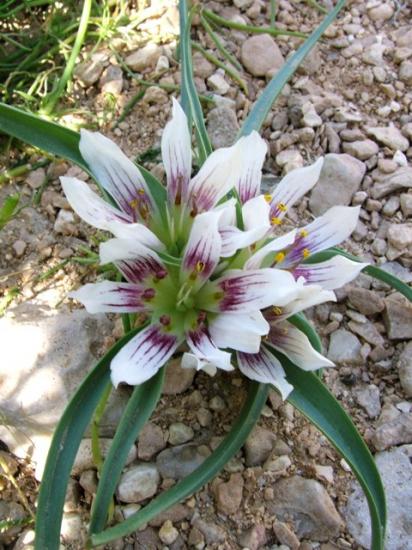
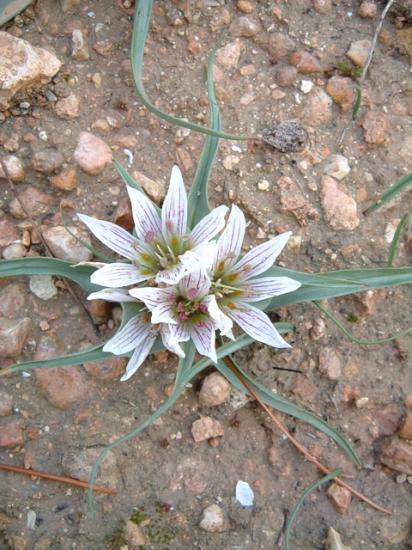
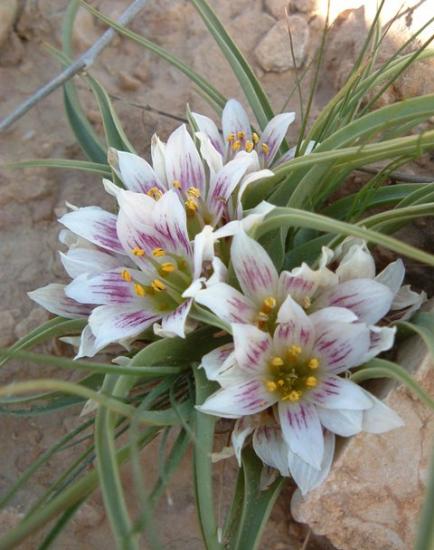
The photo below by Gottfried Milkuhn shows a plant in cultivation.
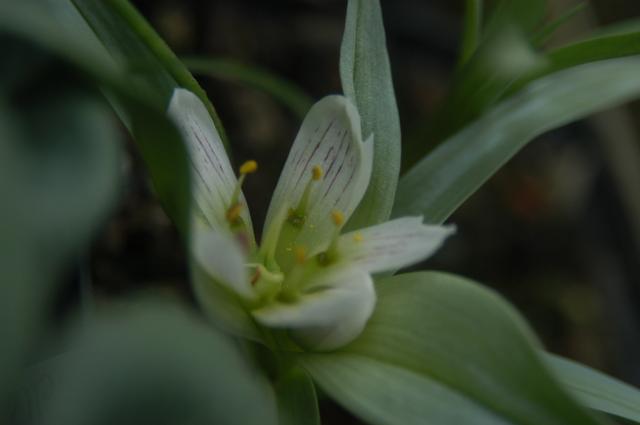
Colchicum rechingeri (Greuter) J.C.Manning & Vinn., syn. Androcymbium rechingeri Greuter, is native to western Kriti to northern Libya. Height: 2-7 cm. The photos below were taken by Gottfried Milkuhn of plants in cultivation.

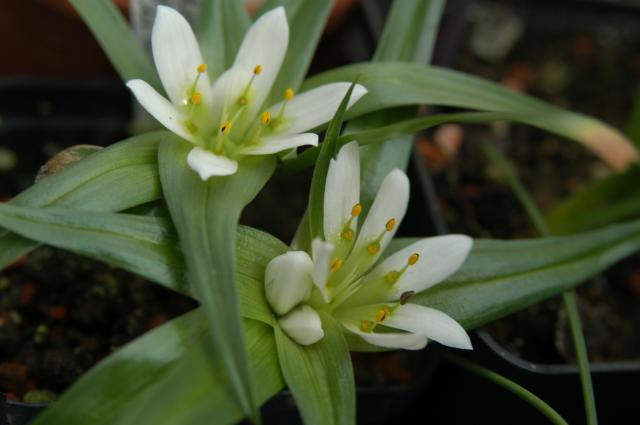
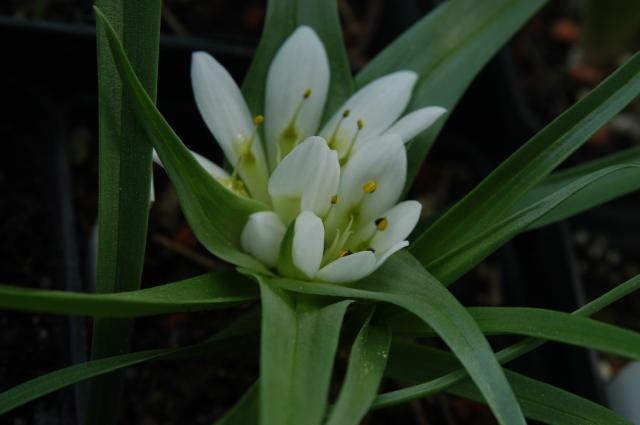
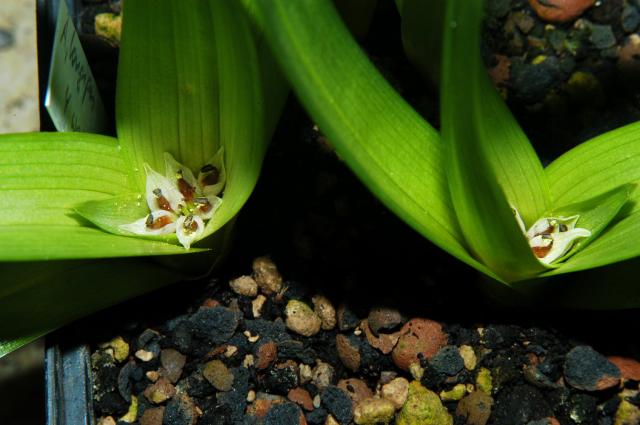
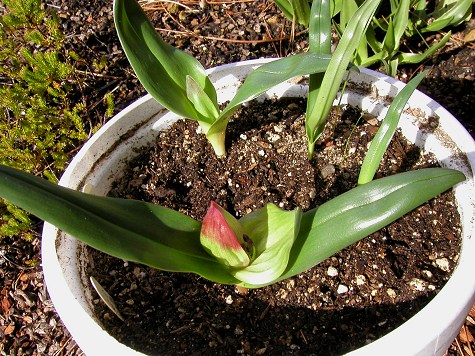
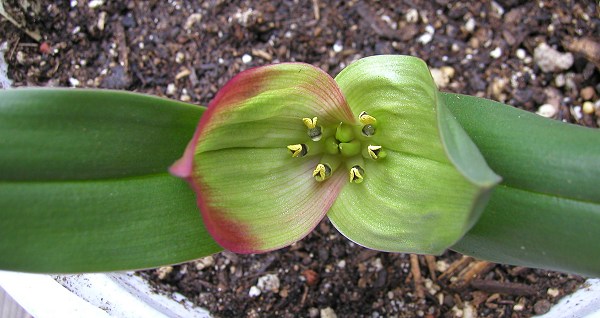
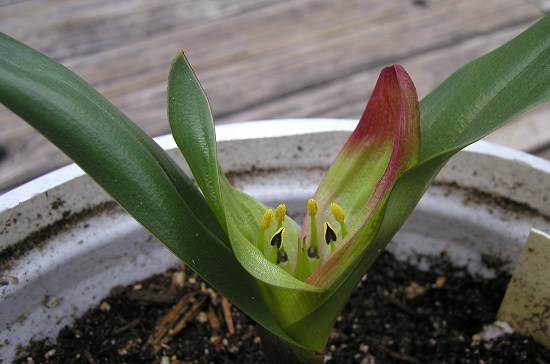
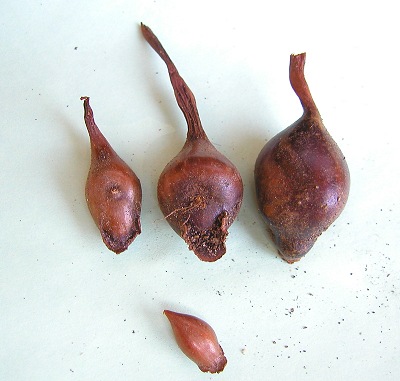
Colchicum spp., syn. Androcymbium spp. shown below are a number of unidentified species. In the first photo Rogan Roth would love to know what this attractive species is called. These plants grown from seed ex. Silverhill Seeds are easy to grow, proliferating rapidly. The second photo is from Carl Frederick.
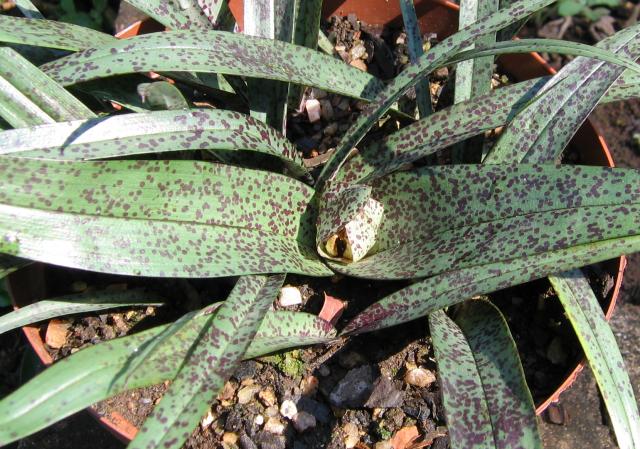
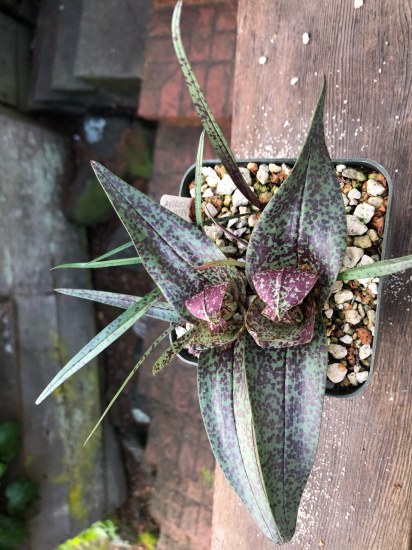
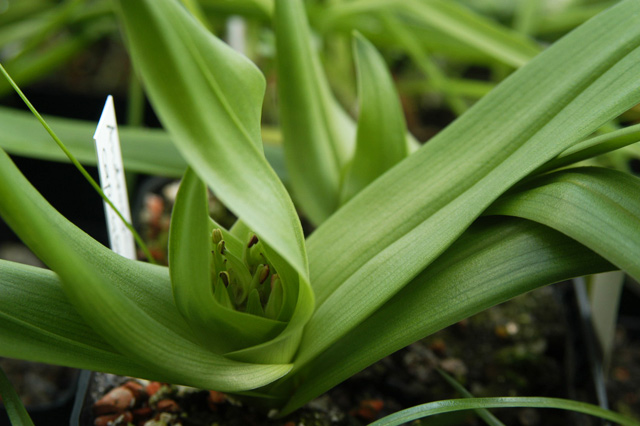
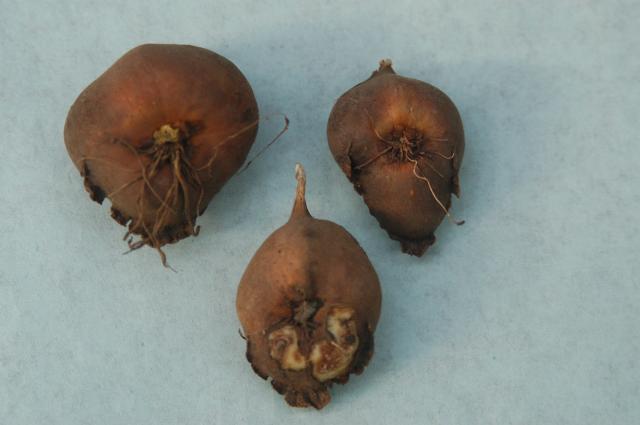
These photos by Mary Sue Ittner show plants grown from seed and blooming in Northern California for the first time in December 2003. There are three views, one of the plants in a pot, one looking down on the flowers, and the third a close-up showing the bracts and the stamens. It most closely resembles what was Androcymbium latifolium in the key in The Color Encyclopedia of Cape Bulbs but Julian Slade thinks it may be a hybrid with it and another species. A final photo taken when dormant shows the corms. This plant has not done well in the wet humid coastal Northern California winters.
Species seen and photographed in Namaqualand are pictured below. The first two were taken in the Kamiesberg by Andrew Harvie. The last was photographed by Mary Sue Ittner.
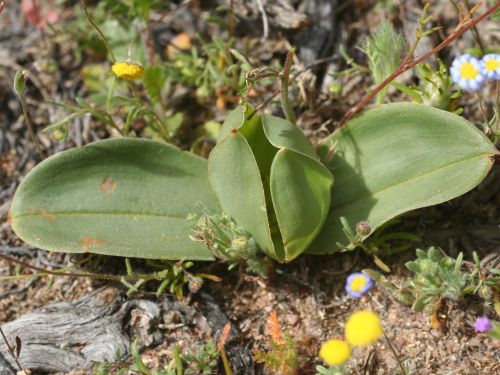
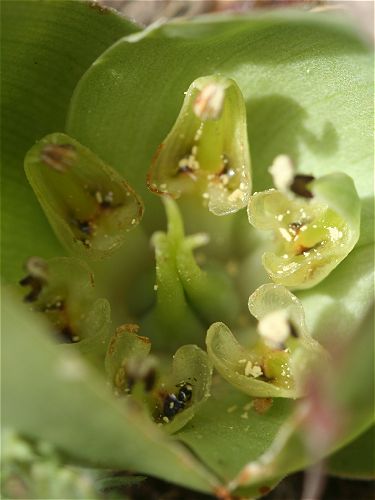
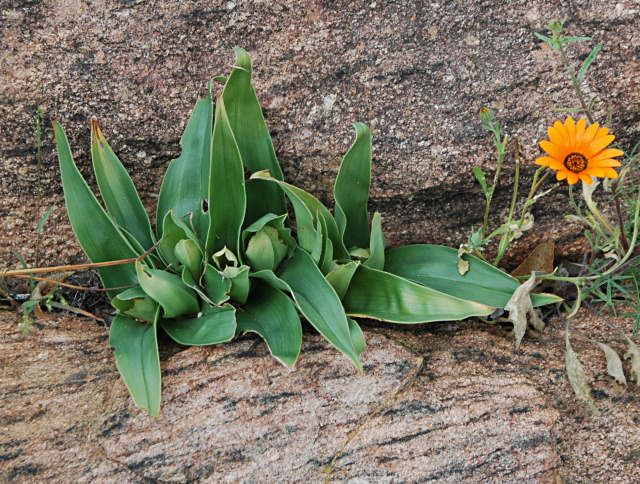
Colchicum striatum (Hochst. ex A.Rich.) J.C.Manning & Vinn., syn. Androcymbium striatum Hochst. ex A.Rich., is found on damp ground among rocks and gravel patches from 1800-3000 meters from the Eastern Cape, South Africa to Tropical Africa. Leaves are slender and keeled and flowerheads are hidden within large white petal-like bracts striped with green or violet. Height: to about 35 cm. The first two photos by Cameron McMaster were taken in the Eastern Cape, South Africa. The third photo was taken on a rainy day in January by Bob Rutemoeller. The last two photos were taken at Andriesberg.

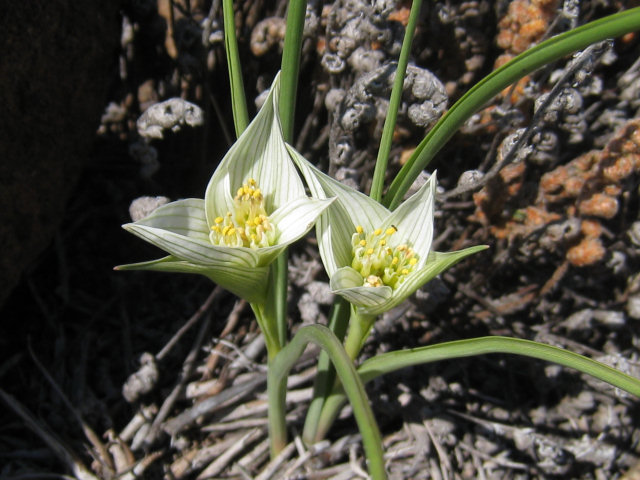
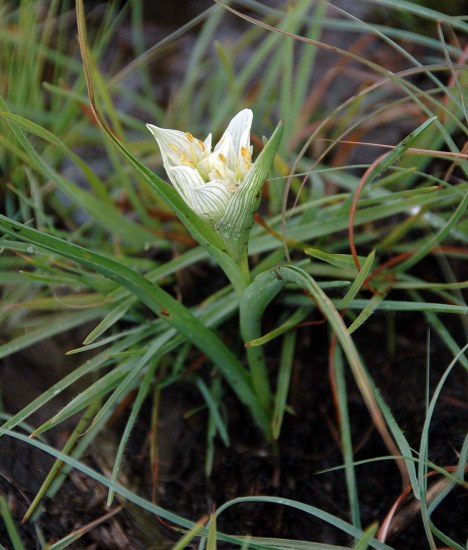
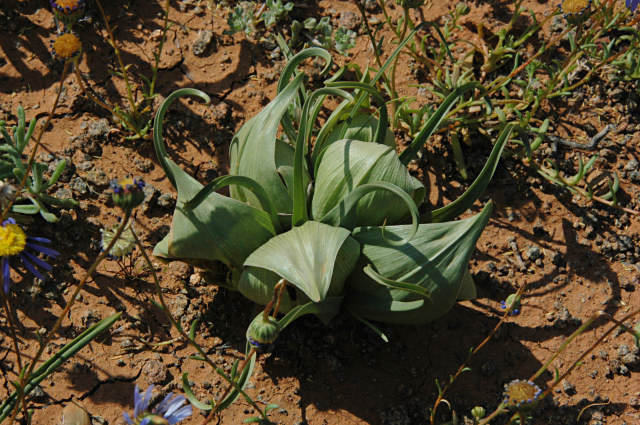
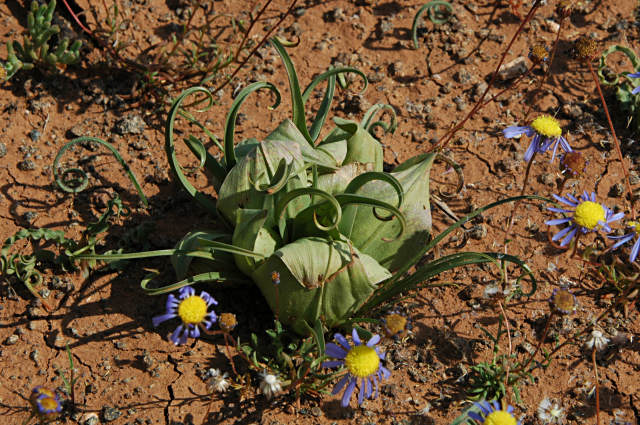
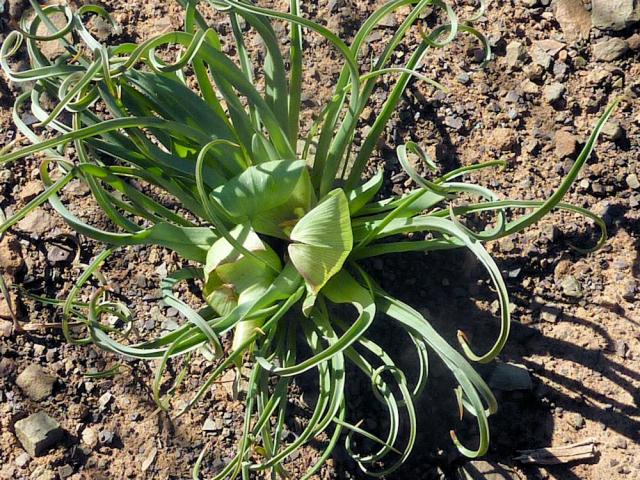
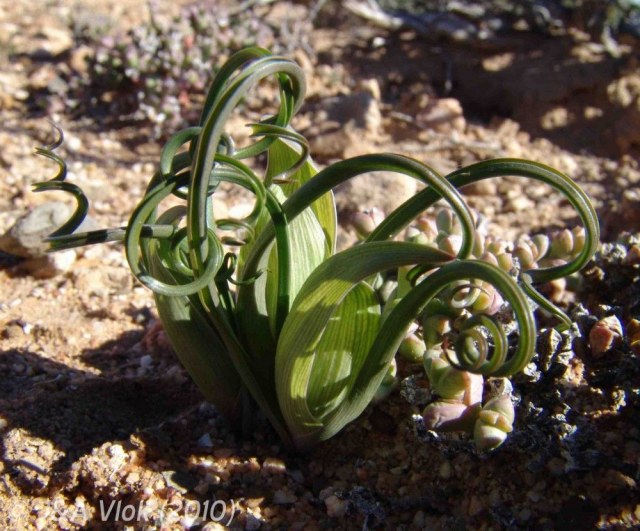
Colchicum volutare (Burch.) J.C.Manning & Vinn., syn. Androcymbium volutare Burch., is found in gravelly clay in karroid scrub from the western Karoo to Little Karoo. It has several narrow leaves that are coiled. Flowers are enclosed in a pair of pale green upright bracts with coiled tips. Height range: 15-30 cm. The first two photos were taken by Bob Rutemoeller and Mary Sue Ittner in Calvinia September 2006. The third photo was taken by Cameron McMaster September 2011 near Middelpos. The last photo from the book Plants of the Klein Karoo courtesy of Jan and Anne Lise Schutte-Vlok.
Colchicum index - Colchicum a-h - Colchicum i-r - Colchicum s-z - Colchicum hybrids - Androcymbium - Bulbocodium - Merendera